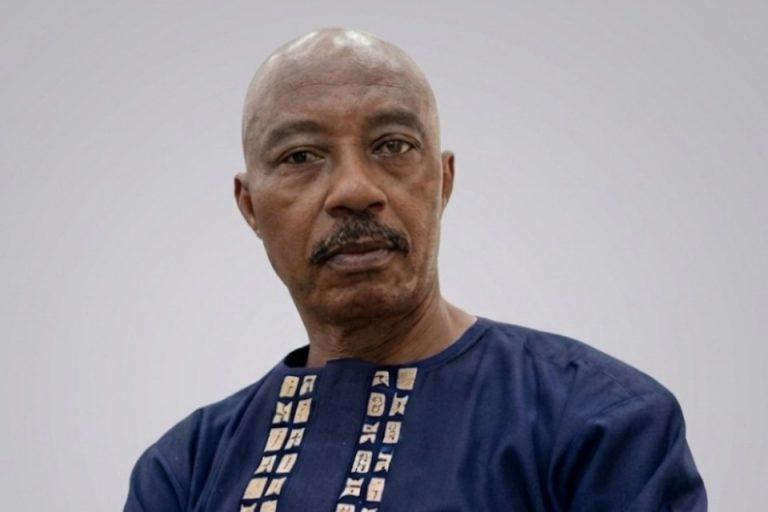

Any government official, whether in the Legislature, the Executive, or the Judiciary, who obstructs the media in the performance of its constitutional functions is violating the Constitution, breaching the Code of Conduct for Public Officers contained in the Constitution and violating his or her oath of office, according to Mr Edetaen Ojo, Executive Director of Media Rights Agenda (MRA).
Delivering a keynote address titled “Addressing Media Repression in Nigeria: Safeguarding Press Freedom and Democratic Accountability” at the 2025 Annual Congress and Annual General Meeting (AGM) of the International Press Institute (IPI) Nigeria, held on December 2 and 3, 2025, at the Nicon Luxury Hotel in Abuja, Mr Ojo stressed that the media does not only have the freedom to hold the Government accountable, but is, in fact, obligated by the Constitution to do so.
The annual congress, attended by dozens of eminent personalities from within and outside the media sector, was chaired by the Vice-President of Nigeria, Senator Kashim Shettima, while the Minister of Information and National Orientation, Alhaji Mohammed Idris, was the special guest of honour.
In his remarks, Mr Ojo outlined the role of the media under Nigeria’s democratic system of government, as provided by the Constitution, emphasising that although fairly short, Section 22 of the Constitution, which sets out the duty of the media, is nonetheless very loaded.
Quoting the section, which states that: “The press, radio, television and other agencies of the mass media shall at all times be free to uphold the fundamental objectives contained in this Chapter (Chapter II) and uphold the responsibility and accountability of the Government to the people,” he noted that there are many different interpretations that can be put to the section and that all of them would be correct given the very robust nature of the provision.
Mr Ojo explained that the section is part of Chapter Two of the Constitution, which outlines broad governance principles for Nigeria and lays out moral, political, and governance obligations for the State, adding, “Section 22 is a constitutional directive on the role of the media in governance.”
He said the section establishes the oversight and watchdog function of the media in Nigeria and positions the media as an instrument to promote transparency and accountability in governance; provide information to the public, and therefore to the people; serve as a check on governmental power; and protect the country’s democracy by keeping citizens informed.
According to him, the section recognises the media as an essential part of governance and democratic accountability and signals that the media must be allowed to operate without undue interference or hindrance by the State or any actor.
Mr Ojo said: “This freedom implies that the media must be independent and protected from censorship. It should be able to investigate, publish, criticise, and expose wrongdoing; and have the freedom to inform the public about any and everything to advance accountability.”
Observing that Section 22 is mandatory in the use of the word “shall”, he stressed that “It does not lend itself to any ambivalence.”
Mr Ojo noted that one of the justifications frequently given for the harassment, intimidation, and other forms of attacks on journalists is the claim that their reporting or commentary undermines national security.
But he highlighted section 14(2)(b) of the Constitution, which provides that “the security and welfare of the people shall be the primary purpose of government”, arguing that since the provision is also part of Chapter Two, the oversight role of the media under Section 22 of the Constitution also extends to holding government responsible and accountable with respect to the security and welfare of the people.
He also noted that Section 22 of the Constitution is non-justiciable in light of Section 6(c) and that the whole of Chapter Two is also non-justiciable.
Mr Ojo argued that “Having made Chapter Two non-justiciable, the Constitution puts the media in charge of ensuring respect for and compliance by Government with Chapter Two.
“In other words, it makes the media the constitutional mechanism to enforce accountability under Chapter Two and makes public scrutiny of government officials a constitutional duty of the media,” he added.
He noted that successive governments since 1999 have taken advantage of the fact that Section 22 is non-justiciable to obstruct the media in the performance of this constitutional duty, contending that “in so doing, they are in flagrant violation of the Constitution.”
Citing Section 13 of the Constitution, which provides that, “It shall be the duty and responsibility of all organs of government, and of all authorities and persons, exercising legislative, executive or judicial powers, to conform to, observe and apply the provisions of this Chapter (II) of this Constitution,” Mr Ojo insisted that “any organ of government, any authority, or any person exercising legislative, executive or judicial powers, who obstructs the media in the performance of its constitutional functions is violating the Constitution.”
Besides, he said, such a person is also breaching the Code of Conduct for Public Officers contained in Fifth Schedule to the Constitution and violating his or her oath of office, in the light of Paragraph 9 of the Code, which provides that, “A public officer shall not do or direct to be done, in abuse of his office, any arbitrary act prejudicial to the rights of any other person knowing that such act is unlawful or contrary to any government policy.”
Mr Ojo stressed that whenever any public official directs the police or other security or law enforcement agents to arrest a journalist, it amounts to an unlawful exercise of the official’s power and authority.
He remarked that Paragraph 13 of the Code further provides that “A public officer who does any act prohibited by this Code through a nominee, trustee, or other agent shall be deemed ipso facto to have committed a breach of this Code,” arguing that “a simple interpretation of this means the fact that you did not personally prevent a journalist from carrying out his or her professional duties but used the Police or the DSS or some other agency to obstruct the work of the journalist or unlawfully punish the journalist does not exonerate you.”
Mr Ojo similarly outlined some of the obligations of the government to protect journalists to enable them to perform their professional duties safely, pointing out that one of the clearest instruments articulating these obligations is the Declaration of Principles on Freedom of Expression and Access to Information in Africa, adopted by the African Commission on Human and Peoples’ Rights (ACHPR) in 2019.
Citing some provisions of Principle 20 of the Declaration, he noted that the language used in the document is mandatory in the light of the consistent use of the word “shall”. The most relevant provisions, according to him, are:
• 20(1) States shall guarantee the safety of journalists and other media practitioners.
• 20(2) States shall take measures to prevent attacks on journalists and other media practitioners, including murder, extra-judicial killing, torture and other forms of ill-treatment, arbitrary arrest and detention, enforced disappearance, kidnapping, intimidation, threats and unlawful surveillance undertaken by State and non-State actors.
• 20(4) States shall take effective legal and other measures to investigate, prosecute and punish perpetrators of attacks against journalists and other media practitioners, and ensure that victims have access to effective remedies.
• 20(5) States shall be liable for the conduct of law enforcement, security, intelligence, military and other personnel which threatens, undermines or violates the safety of journalists and other media practitioners.
• 20(6) States shall take specific measures to ensure the safety of female journalists and media practitioners by addressing gender specific safety concerns, including sexual and gender-based violence, intimidation and harassment.
Mr Ojo pointed out that all organisations that monitor and document attacks on journalists and the media in Nigeria are consistently recording worrisome levels of such attacks, while the situation appears to be going from bad to worse, arguing that “available data from multiple organisations support this statement.”
He said even more worrying is the fact that government officials, including security, law enforcement, and intelligence agencies, are responsible for most of the attacks when they are the very people who have the specific responsibility to protect journalists.
Mr Ojo referred to the latest report released by Media Rights Agenda in November to commemorate the 2025 International Day to End Impunity for Crimes Against Journalists, saying it revealed that government officials were responsible for nearly 74% of all attacks on journalists documented in Nigeria by the organisation between January 1 and October 31, 2025.
He said: “It is heartbreaking that perpetrators of attacks against journalists, within and outside government, are hardly ever held accountable for their attacks on journalists, including the killing of journalists. Indeed, government officials, both lowly or high-ranking, are also hardly ever reprimanded for attacks on journalists, which unfortunately gives the impression that these acts have the blessing of the State or might in fact be official policy.”
According to him, under such circumstances, it is hard to discourage future attacks on journalists as the signal everyone is getting is that they can attack journalists, even kill journalists and that they will very likely go scot free.
Saying that this is not a record that Nigerians can be proud of, he insisted that “it is now time for the government to respond decisively to this reality and say ‘No more’”
He said: “I think I speak for the entire media community when I say that we stand ready to work with the Government to put in place systems and mechanisms to address this clearly unacceptable situation of media freedom and safety in Nigeria.”