
The Court of Appeal in Abuja has reprimanded the National Broadcasting Commission (NBC) for refusing to file a defence to a suit instituted against it by Media Rights Agenda (MRA), as the Court rejected the Commission’s attempt to overturn the judgment delivered by a Federal High Court in the suit, describing its conduct as vexatious, inequitable and unbecoming of a litigant genuinely seeking justice.
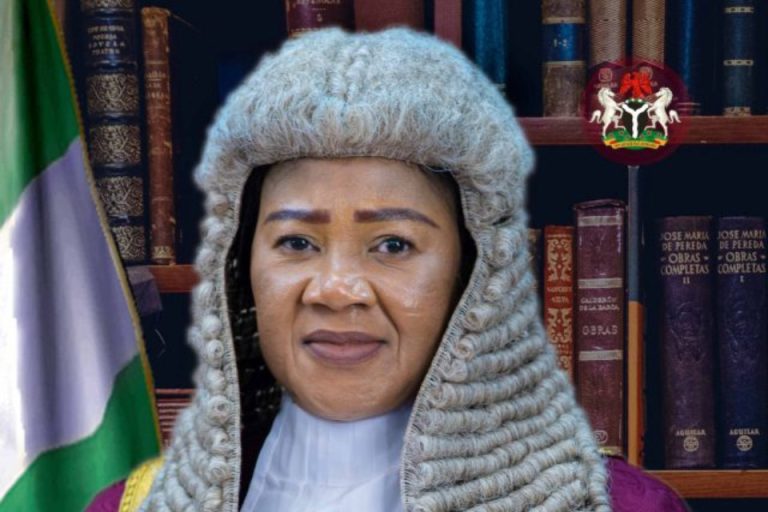
Delivering the judgment of the Court in the NBC’s appeal seeking to set aside a Federal High Court’s judgment perpetually restraining it from imposing fines on radio and television stations, Justice Oyejoju Oyebiola Oyewumi said: “a party who willfully refuses to comply with the orders of Court to enter appearance or file a defence, and indolently stands by while the Court undertakes the rigours of a full trial culminating in the delivery of judgment, cannot subsequently approach the Court with an application to set aside that judgment. Such conduct is vexatious. It is frustrating, inequitable, and unbecoming of a litigant who genuinely seeks justice in the Court.”
According to her, “Equity, as a matter of settled principle, operates on conscience and good faith. He who seeks equity must do equity, and he who comes to equity must come with clean hands. Moreover, equity aids the vigilant and not the indolent. The Appellant’s conduct throughout the proceedings falls short of these equitable standards and disentitles it to the discretionary indulgence of the Court.”
In the appeal, the NBC asked the Court of Appeal to overturn the judgment delivered by Justice James Omotosho on May 10, 2023, in which he ruled that fines are sanctions imposed on a person who has been found guilty of a criminal offence and that under the law in Nigeria, only courts of law are empowered to impose sanctions for criminal offences. On November 23, 2023, the judge also dismissed NBC’s July 2023 motion to set aside the judgment.
The matter arose from a suit filed against the NBC by MRA, challenging its powers to fine broadcasters, in the wake of a March 1, 2019 announcement by the Commission that it had imposed a fine of N500,000 each on 45 broadcast stations for alleged contraventions of the Nigeria Broadcasting Code.
Following the Commission’s failure to defend the suit, Justice Omotosho delivered judgment on May 10, 2023, ruling that fines are sanctions imposed on a person who has been found guilty of a criminal offence and that under the law in Nigeria, only courts of law are empowered to impose sanctions for criminal offences. In setting aside the fines of N500,000 each imposed on the stations, he held that the NBC “is neither a Court nor a judicial tribunal to make pronouncements on the guilt of broadcast stations notwithstanding what the NBC Code says,” adding that the Commission’s action violated the Constitution.
In July 2023, the NBC filed a motion before the same court asking Justice Omotosho to set aside his May 10, 2023, judgment on the grounds that he lacked jurisdiction to enter the judgment and that he made his decision in ignorance of relevant facts. But the judge dismissed the motion on November 23, 2023, describing it as futile and an afterthought, as available evidence showed that the Commission was served with the court’s processes but chose not to appear before the court to defend the suit. The NBC then lodged an appeal against the ruling.
Delivering the lead judgment, Justice Oyewumi said after painstakingly going through Justice Omotosho’s judgment, the Record of Appeal and the processes filed by both parties in the suit, she would be adopting the single issue formulated by MRA’s lawyer, Mr. Ezenwa Anumnu, for determination, namely: Whether Justice Omotosho was right when he refused the NBC’s application to set aside his judgment on basis that the grounds of the Commission’s application did not sustain the application to warrant the grant of the relief sought in the application.

Justice Oyewumi noted that the law is settled that a final judgment of a Court can ordinarily only be set aside on appeal, although there are exceptional circumstances in which a court is vested with inherent jurisdiction to set aside its own judgment in order to prevent manifest injustice.
According to her, the NBC predicated its application on allegations of lack of jurisdiction, abuse of court process, fraud and misrepresentation of facts, as well as the doctrine of res judicata.
But the judge ruled that the Commission failed to demonstrate that any of the essential conditions required to invalidate jurisdiction were absent or breached either by the Federal High Court or by MRA as no credible material has been placed before the Appeal Court to suggest that the Federal High Court was improperly constituted, that the subject matter fell outside its competence, that any feature existed preventing it from exercising jurisdiction, or that the action was not initiated by the due process of law.
In the absence of any such defect, she said, the challenge to jurisdiction becomes entirely speculative and unfounded, adding, “It is therefore on this premise that I hold that the jurisdiction of the trial Court was properly and validly invoked.”
On the NBC’s allegation of abuse of court process against MRA, Justice Oyewumi said “a party who complains of abuse of judicial process must act with promptitude and bring the complaint before the Court immediately the alleged abuse occurs,” adding that “The law does not permit a litigant to lie by, watch the proceedings progress, and only raise the issue after the Court has expended valuable judicial time and resources in the determination of the matter. Such delayed invocation of the doctrine defeats the very essence of the principle, which is designed to protect the integrity of judicial proceedings and prevent misuse of the Court’s processes.”
She stressed that it is a cardinal principle of equity that the law aids the vigilant and not the indolent and that a litigant who sleeps on his rights cannot later seek equitable indulgence after undue delay, saying the principle had been affirmed by the Supreme Court.
Justice Oyewumi held that: “the Appellant indolently failed and refused to enter an appearance or participate in the proceedings throughout the pendency of the suit until after judgment had been duly delivered. Such conduct, in my respectful view, amounts to a deliberate disregard for the judicial process. It is settled law that once a court of competent jurisdiction has delivered its final judgment, it becomes functus officio in respect of that matter and lacks the authority to reopen or revisit it. The court’s jurisdiction is over; the cause is thereby exhausted, and it cannot sit on appeal over its own decision.”
Besides, she emphasized, abuse of the court process does not constitute one of the recognized grounds upon which a court may set aside its final judgment, and held that the NBC’s “reliance on alleged abuse of court process as a basis for disturbing the judgment is legally misconceived and unsustainable.”
On the issue of res judicata, Justice Oyewumi noted that the “doctrine of estoppel per rem judicata” is a fundamental principle of law designed to ensure the finality and conclusiveness of judicial decisions and serves the important purpose of protecting parties from being harassed by repeated litigation over the same subject matter and prevents multiplicity of suits.
According to her, the doctrine rests on the public policy that there must be an end to litigation and that a party should not be vexed twice for the same cause, adding that once a competent Court has finally determined an issue between parties, neither party is permitted to reopen the matter in subsequent proceedings.
But she stressed that “Just as abuse of court process, it is settled that the doctrine must be pleaded and raised timeously during the proceedings. Once a court has delivered its judgment, it lacks the competence to revisit or set aside that judgment on the basis of alleged abuse of process. To attempt to do so is akin to administering medicine to a deceased patient; it serves no legal purpose.”
Justice Oyewumi ruled that the NBC, having wilfully refused to comply with the orders of the Federal High Court to enter an appearance and participate in the proceedings, could now seek to resurrect a matter that has been conclusively determined, adding that “a litigant who elects to remain aloof during trial cannot be permitted to awaken a dormant cause after judgment has been delivered.”
She also agreed with Justice Omotosho of the Federal High Court that the doctrine of res judicata does not constitute a valid ground upon which a trial court could set aside its judgment.
On the NBC’s accusation of fraud against MRA, Justice Oyewumi disagreed with the NBC’s contention that MRA misrepresented facts in its affidavit of non-multiplicity of suits, saying, “I do not agree that an alleged false statement in an affidavit equates to fraud. At best, it constitutes perjury, and not fraud. The suggestion that the failure to disclose to the court an alleged prior suit, in the same spirit as the present proceedings, amounts to fraud is untenable and thus discountenanced.”
According to her, “Affidavit evidence is filed in virtually every proceeding, and it is not unusual for parties to present facts in a manner that advances their case. Should the court now treat every omission or undisclosed fact as constituting fraud? Certainly not. It is the duty of a party to bring to the court’s attention facts that may aid its own case at the material time. Where a party fails to avail itself of the opportunity given by the court to present its case, that party must bear the consequences.”
Justice Oyewumi ruled that the NBC’s “indolence in failing to enter an appearance or participate in the proceedings cannot be transformed by elegant argument into an allegation of fraud. Furthermore, the processes were duly served, and the Appellant failed to react to them. It is settled law that unchallenged evidence is deemed admitted. In the circumstances, the allegation of fraud lacks any factual or legal foundation and is wholly unsustainable.”
She noted that “depositions in affidavit on material facts resolve applications in court” and that “where depositions on material facts in an affidavit in support of an application are not denied by the adverse party filing a counter-affidavit, such facts not denied in the affidavit in support remain the correct position, and the court acts on them except they are moonshine. Material facts in a counter-affidavit not denied by a reply affidavit are the true position. It is only when the affidavits cannot resolve facts that parties are invited to lead evidence in proof of the facts they deposed to.”
Justice Oyewumi held that the NBC, having failed to challenge or counter the averments made by MRA during the proceedings, cannot now, after judgment has been delivered, turn around and claim that such averments were fraudulent or misleading.
She said such a belated assertion is nothing more than an afterthought and cannot form the basis for disturbing a judgment of the Federal High Court.
Justice Oyewumi said having considered all the grounds of appeal raised by the NBC and resolved them in favour of MRA, she found no reason to disturb the decision of the Federal High Court and, in consequence, ruled that the appeal lacked merit in its entirety.
She dismissed the appeal accordingly and affirmed the decision of the Federal High Court.
The two other justices who sat on the panel, Justice Abba Bello Mohammed and Justice Donatus Uwaezuoke Okorowo, agreed with her reasoning and conclusion. They too dismissed the appeal and endorsed her consequential orders.