Mr Edetaen Ojo, the Executive Director of Media Rights Agenda (MRA), has described the Freedom of Information (FOI) Act, 2011, as the most potent legal instrument for fighting corruption, challenging secrecy, making governance more responsive, facilitating public participation in governance, and restoring public trust in government.
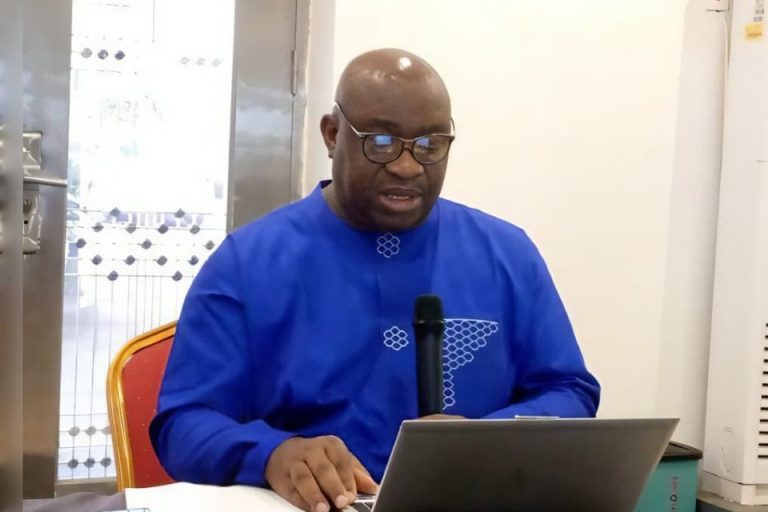
Mr Ojo stated this on December 9, 2025, in his welcome address to participants at the two-day Freedom of Information (FOI) Training Workshop for journalists and representatives of civil society organisations (CSOs) organised by MRA in Abuja.
He told participants that “In an environment where we constantly see challenges to media freedom, where reporting facts can lead to threats, where legitimate inquiry can be met with intimidation, the FOI Act is your shield and your sword. It turns anonymous accusations into documented facts, and mere suspicion into verifiable evidence.”
He narrated the over 12-year trajectory of the FOI Bill before it became law on May 28, 2011.
Emphasising that the FOI Act, a landmark piece of legislation, was enacted about 15 years ago after MRA and its partners fought tirelessly to bring it to life, he pointed out that many public institutions still treat the Act with indifference or outright hostility, a challenge that currently plagues its effective implementation.
Mr Ojo noted that the FOI Act is not a suggestion but a mandate, adding that “it does not bestow any privilege on us but grants us a right,” while emphasising that “we still need to claim this right.”
He stated that: “The law fundamentally redefines the relationship between members of the public and the state, represented by Government. It tells public officials and institutions, quite clearly, that they are merely custodians of public records and information, and that the ultimate owner of the information is the Nigerian people.”
The workshop, according to Mr Ojo, was designed to turn the participants into experts in deploying the Act, adding that MRA hopes that by the end of the workshop, participants will know how to draft an iron-clad FOI request that will be difficult for any public institution to legally refuse; how to navigate the common pitfalls and illegal excuses public institutions use to delay disclosure; and how to effectively enforce their right through the courts and other non-judicial mechanisms when they are wrongfully denied access to information, and thereby make the law to work for the public good.
He added that MRA’s goal is not just to familiarise the participants with the text of the Act, but to empower them with the practice of asserting their right to know, systematically and relentlessly.
He pointed out that: “The quality of our democracy, the health of our economy, and the integrity of our governance all hinge on the information that flows from the corridors of power to the public domain.”
Noting that by collaborating, sharing experiences, and amplifying each other’s work, Mr Ojo said participants can enhance the effectiveness of the FOI Act and make it a living instrument for democratic governance.
He used the opportunity to announce MRA’s call for entries for the Goodluck Jonathan Freedom of Information Awards 2026, and to encourage all journalists to apply.
While acknowledging and thanking Luminate for its support for the workshop, he encouraged the participants to engage fully in all the sessions, ask questions where they are not clear about any issue, share their experiences when the opportunity arises to do so, and explore opportunities for collaboration with MRA, as well as other media or civil society organisations represented at the event, even beyond the two days of the workshop.