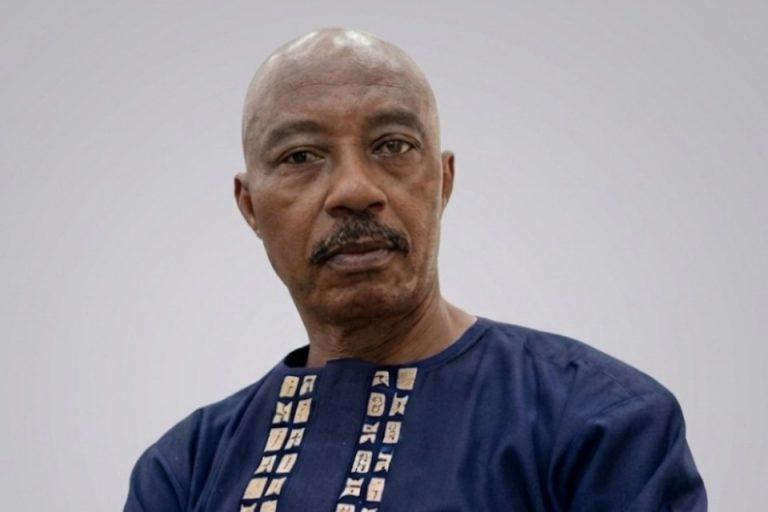
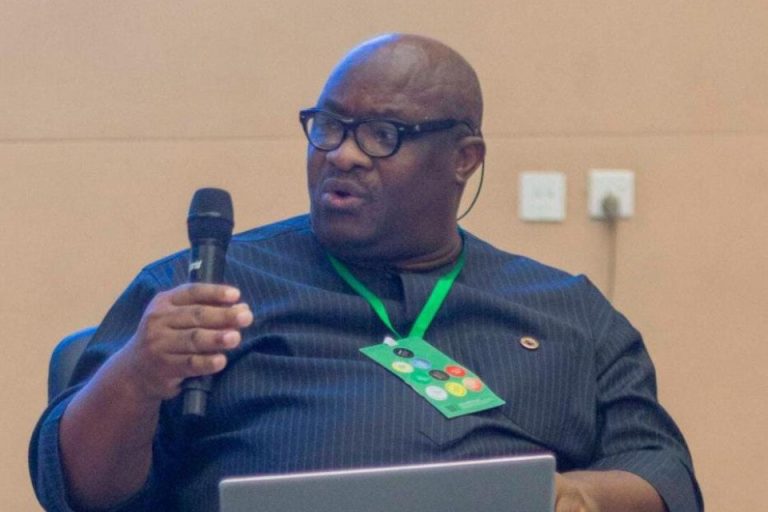
The Executive Director of Media Rights Agenda (MRA), Mr Edetaen Ojo, has proposed measures to ensure that the deployment of Artificial Intelligence (AI) systems and digital public infrastructure (DPI) benefits rather than harm marginalised communities, saying that such technological interventions need to integrate human-rights impact assessments into all stages of their design and deployment and should be rights-respecting.
Mr Ojo made the proposals in his “lightning intervention” at the end of a Freedom Online Coalition (FOC) panel discussion held at the United Nations headquarters in New York on December 15, 2015, on the margins of the WSIS High-Level Meeting.
The side event titled “From Commitments to Action: Operationalising Human-Rights Based Governance for AI and Digital Public Infrastructure,” was organised on behalf of the FOC by the Government of Estonia, the Coalition’s current Chair, and the Government of The Netherlands, which chaired the FOC in 2024.
Noting that there was no doubt about the many potential benefits of AI systems and DPIs, he stressed that despite their potential benefits, there are many challenges with their deployment in general, which is even moreso for marginalised and underrepresented communities, particularly from the global South.
Mr Ojo said: “This makes it imperative that deliberate efforts are made to consult and engage with such underrepresented communities or ensure their participation in consultations before the deployment of these technologies so that their perspectives can be factored in the plans.”
Highlighting some of the challenges, he said that the systems are often privately controlled with little or no oversight, they are frequently non-transparent, and almost always introduced without any form of public consultation.
According to him, AI deployment in content moderation algorithms can end up suppressing legitimate expression in minority languages with limited training data, while AI-enhanced policing technologies, such as predictive policing, drone surveillance, and risk scoring, can lead to racial, ethnic, or socio-economic profiling.
Besides, Mr Ojo observed, digital solutions frequently ignore local languages and customs, with the result that AI deployments can erase indigenous identities.
He insisted that the deployment of DPI often requires energy-intensive data centres, which further disadvantages many Global South communities, which suffer from energy insufficiency.
Stressing that there are many more such issues plaguing the deployment of the technologies for marginalised and underrepresented communities, Mr Ojo suggested that to ensure that the deployment of AI and DPI systems benefits rather than harm such communities, the interventions need to integrate human-rights impact assessments into all stages of design and deployment.
In addition, he said, efforts should be made to guarantee data privacy, transparency, and accountability in the deployment of the technologies; promote inclusion, consultation, and community participation; and strengthen regulatory oversight.
Mr Ojo also proposed the establishment of independent redress mechanisms, as well as investments in digital literacy and fair technological development.
The panel discussion, moderated by Ms Lea Kaspar, Executive Director of Global Partners Digital and Head of the FOC Support Unit (Secretariat), was focused on how to turn the
WSIS+20 and FOC human-rights commitments into practical action.
It examined how the FOC has advanced global digital governance and multistakeholder approaches in 2025 under the Estonian Chairship, as speakers explored how the FOC’s work has contributed to human-rights–based governance of AI and digital public infrastructure, as well as the priorities for the coming year under the Chairship of the Coalition by Switzerland.
The discussions highlighted gaps, emerging risks, and opportunities for practical implementation of WSIS+20 commitments.
Speakers in the panel discussion were Ambassador Rasmus Lumi, Under-Secretary at the Ministry of Foreign Affairs Estonia and Chairperson of the FOC during the Estonian Chairship; Ms Anriette Esterhuysen, Senior Advisor on Global and Regional Internet Governance at the Association for Progressive Communications (APC); Ms Theresa Swinehart, Senior Vice-President for Global Domains and Strategy at the Internet Corporation for Assigned Names and Numbers (ICANN); Dr Chengetai Masango, Head of the UN Secretariat for the Internet Governance Forum (IGF); and Mr Bernard Maissen, State Secretary and Director, Federal Office of Communications (OFCOM) of Switzerland.
Besides Mr Ojo, other FOC stakeholders who spoke at the lightning interventions section of the event were Mr Zach Lampell, Senior Legal Advisor and Coordinator for Digital Programs at the International Center for Not-for-Profit Law (ICNL); Under-Secretary Jarno Syrjälä of the Ministry for Foreign Affairs of Finland; Ms Diane Chang, Senior Fellow at Tech Global Institute; Ms Elizabeth Orembo, International Engagement Lead at Research ICT Africa; and Ms Anke Sikkema, Deputy Director for Digital Economy at the Ministry of Economic Affairs of The Netherlands.