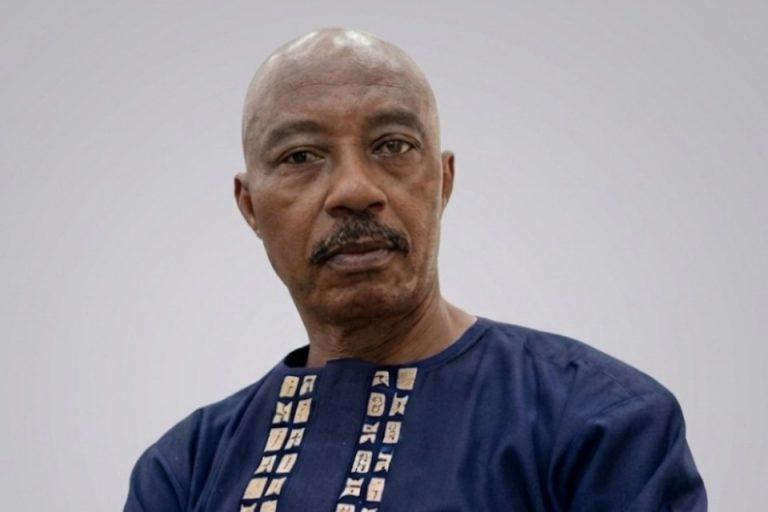

Media Rights Agenda (MRA) has filed a suit against the Federal Government and Police authorities at a Federal High Court in Abuja over persistent threats and attacks against female journalists in Nigeria and is asking the court to issue an order of perpetual injunction restraining the government, its officials, agents, or any other person acting under their authority from arresting, detaining, harassing, intimidating, assaulting, threatening, or otherwise interfering with the lawful work of female journalists.
In the suit filed on its behalf by Abuja-based human rights lawyer, Ms Mojirayo Ogunlana and Mr Monday Arunsi, MRA named, as respondents, the Federal Government of Nigeria, the Attorney-General of the Federation, the Inspector-General of Police, and the Nigeria Police Force.
The organisation listed in the suit 17 female journalists who have been victims of such attacks between 2022 and 2025, with details of their news organisations, the various forms of attacks that they were subjected to and the dates of the incidents.
In its Originating Summons, MRA formulated three issues for the court to determine, namely:
• Whether the persistent acts of harassment, intimidation, arbitrary arrest, physical assault, and violence perpetrated against female journalists in Nigeria by agents of the State and other individuals acting with the tacit approval or acquiescence of law enforcement agencies do not constitute a violation of the rights of female journalists guaranteed under Sections 33, 34, 35, 39, and 42 of the 1999 Constitution, as amended;
• Whether the failure of the Respondents to take concrete measures to ensure the safety of female journalists and to prevent and investigate acts of harassment, intimidation, and violence against them violates Articles 4, 5, 9, and 18(3) of the African Charter on Human and Peoples’ Rights and Principle 20(4), (5), and (6) of the Declaration of Principles on Freedom of Expression and Access to Information in Africa; and
• Whether the Respondents are not under a constitutional and international obligation to adopt and enforce specific measures and policies to safeguard the physical and psychological integrity of female journalists in Nigeria and to protect their right to freely practice journalism without fear, discrimination, or intimidation.
MRA claimed that in the course of carrying out their journalistic duties, the 17 listed journalists had been subjected to harassment, intimidation, physical assault, arbitrary arrest, unlawful detention, and other acts of rights violation and ill-treatment, often at the hands of law enforcement and security agencies or with their acquiescence.
It contended that under both domestic and international human rights law, the Government of Nigeria bears a positive duty to protect all persons within its jurisdiction from violations of their fundamental rights and that the duty is not confined to refraining from interference but extends to taking proactive and effective measures to prevent violations, investigate all reported cases, prosecute offenders, and provide remedies to victims.
According to the organisation, the duty is particularly significant where the State knows or ought reasonably to know of a pattern of attacks or threats against a specific group, such as journalists, whose work is essential to democratic governance.
It noted that the Government’s obligation flows from Nigeria’s binding commitments under the African Charter on Human and Peoples’ Rights, particularly Articles 4, 5, 9, and 18(3), the International Covenant on Civil and Political Rights, and the Declaration of Principles on Freedom of Expression and Access to Information in Africa of 2019, particularly Principle 20(4), (5), and (6), which explicitly impose on States the responsibility to protect journalists, to investigate and prosecute perpetrators of attacks, and to adopt gender-sensitive measures that ensure the safety and independence of journalists.
MRA argued that Principle 20 of the Declaration represents a clear articulation of the State’s legal and moral duty to protect journalists, not as a matter of discretion or policy, but as a binding responsibility under regional human rights standards to which Nigeria has subscribed, adding that it recognises that journalists perform a public function essential to democracy and that the State must ensure their protection from both State and non-State actors.
It, therefore, asked the court for the following reliefs:
• A declaration that the persistent and continuing acts of harassment, intimidation, physical assault, arbitrary arrest, unlawful detention, online and offline threats, and other forms of violence directed at female journalists in Nigeria constitute gross and continuing violations of their fundamental rights to life, dignity of the human person, personal liberty, freedom of expression and the press, and freedom from discrimination guaranteed under Sections 33, 34, 35, 39 and 42 of the Constitution; Articles 4, 5, 9 and 18(3) of the African Charter; and Principles 1 and 20 (4)–(6) of the Declaration of Principles;
• A declaration that the persistent acts of targeted attacks, harassment, intimidation, and violence against female journalists in the course of performing their lawful professional duties amount to discrimination and inhuman or degrading treatment, in violation of Sections 34 and 42 of the Constitution; Articles 5 and 18(3) of the African Charter; and Nigeria’s obligations under applicable international and regional human rights instruments guaranteeing equality, dignity, and protection from discriminatory abuse.
• A declaration that the failure, refusal, or neglect of the Federal Government of Nigeria, the Attorney-General of the Federation, and the Inspector-General of Police to take prompt, effective and gender-sensitive measures to prevent, investigate, prosecute and punish perpetrators of attacks against female journalists amounts to a breach of Nigeria’s constitutional and international obligations under Sections 33, 34, 35, 39 and 42 of the Constitution; Articles 4, 5, 9 and 18(3) of the African Charter; and Principles 20(4) – (6) of the Declaration of Principles;
• A declaration that the Federal Government bears responsibility for the acts and omissions of its law-enforcement, security and intelligence agencies, including the Nigeria Police Force, where those agencies, their officers, agents or other state actors have perpetrated, facilitated or failed to prevent violations of the rights of female journalists;
• An order of mandamus directing the Federal Government, the Attorney-General of the Federation and the Inspector-General of Police to, within a timeframe to be determined by the Court promptly investigate, prosecute and, where appropriate, discipline or remove all persons, including law-enforcement officers and state agents, found responsible for harassment, assault, violence, arbitrary arrest or unlawful detention of female journalists named in this suit and others similarly situated; and to develop and institutionalie gender-sensitive operational protocols and compulsory training for all security, intelligence, and law-enforcement personnel on the rights of journalists and the specific safety needs of female journalists; and
• An order of perpetual injunction restraining the Respondents, their officers, agents, servants, privies and any other person acting under their authority, from arresting, detaining, harassing, intimidating, assaulting, threatening, or otherwise interfering with the lawful work of female journalists in Nigeria, and practices that amount to inhuman or degrading treatment contrary to the Constitution and the African Charter.