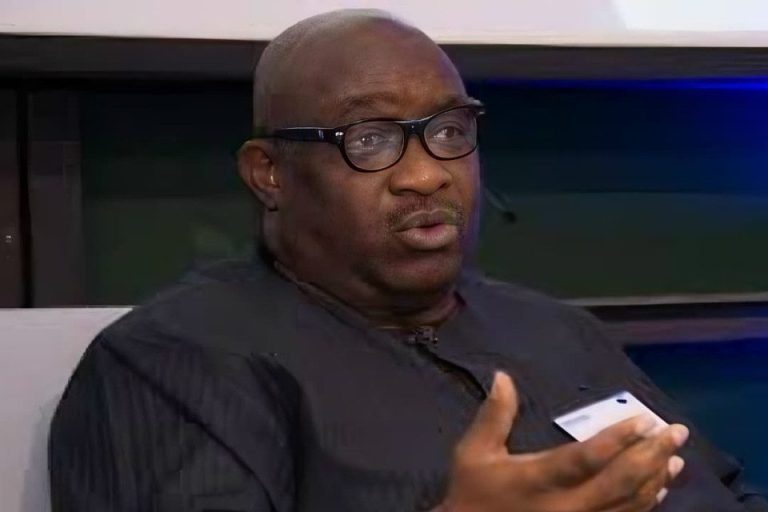
The Executive Director of Media Rights Agenda (MRA), Mr. Edetaen Ojo, has called on Federal and State Governments to respect media freedom, ensure the safety of journalists and hold perpetrators of attacks against journalists accountable in order to restore the media’s ability to fulfill its constitutional mandate of upholding the responsibility and accountability of the Government to the people.
Answering questions in a wide-ranging interview with the Media Rights Monitor on the media’s performance of its duty to hold government accountable, Mr. Ojo said, although Section 22 of the Constitution envisions a robust and independent media serving as a cornerstone of democratic accountability, the actions and inactions of governments at all levels, as well as their officials and agencies over the years are steadily eroding this constitutional vision.
According to him, reversing this trend requires not only legal and institutional reforms but also a genuine commitment by those in power to uphold transparency and accountability while respecting the public’s right to know.
Mr. Ojo noted that Section 22 of the Constitution assigns a clear and unequivocal responsibility to the media to hold the government accountable to the people and establishes the press, radio, television, and other agencies of mass communication as watchdogs of governance, with a duty to ensure transparency, expose wrongdoing, and facilitate informed public participation in democratic governance and processes.
He said: “In practice, governments at Federal and State levels, along with various institutions of governance, particularly those in the security, intelligence, and law enforcement agencies, are increasingly impeding the media’s ability to perform this constitutional duty. These impediments are systemic, multifaceted, and often deliberate, creating an environment where accountability journalism is constrained, and impunity is entrenched as a part of the governance culture.”
Mr. Ojo pointed out that a primary tool for holding government accountable is access to accurate and timely information but regretted that despite the existence of the Freedom of Information (FOI) Act over the past 15 years, many public institutions routinely deny, delay, or ignore requests for information while journalists are frequently met with bureaucratic hurdles, vague justifications, or outright refusals when seeking data or information on public spending, policy decisions, or administrative actions.
According to him, “In many cases, Ministries, Departments, and Agencies (MDAs) of both Federal and State governments fail to maintain proper records, making it nearly impossible for journalists to obtain information necessary for investigative or even routine reporting.”
Mr. Ojo said the National Broadcasting Commission (NBC), which regulates the broadcast sector, has often been used as an instrument of control rather than an impartial arbiter, with arbitrary and exorbitant fines and other sanctions, and threats of license revocation are sometimes imposed on broadcast stations under vague or selectively enforced provisions.
He argued that instead of promoting professional standards, such actions are frequently perceived as punitive measures against dissenting voices, thereby weakening the independence of the media, which in turn creates a chilling effect, discouraging critical reporting and fostering self-censorship among journalists and media organizations.
Mr. Ojo lamented that journalists in Nigeria continue to face harassment, intimidation, and arbitrary detention by law enforcement and security agencies, with reporters covering sensitive issues such as corruption, elections, or security matters being particularly vulnerable.
Such actions, he said, not only violate media freedom but also send a broader message that critical journalism carries personal risks, thereby contributing to a culture of secrecy that directly undermines the constitutional mandate of the media, adding that “the result is a shrinking civic space where journalists may avoid pursuing sensitive stories that could expose wrongdoing for fear of reprisals.”
Observing that Governments wield significant influence over the financial sustainability of media organizations through the allocation of advertising and patronage, Mr. Ojo accused public institutions of distributing advertising selectively, favoring compliant media outlets while excluding those perceived as critical, adding that “This economic leverage can subtly coerce media organizations into toning down critical coverage or avoiding certain topics altogether, thereby compromising editorial independence and weakening accountability journalism.”
Mr. Ojo identified another growing trend as the use of defamation suits and other legal actions by public officials to intimidate journalists and media houses, arguing that although the right to seek legal redress is legitimate, the filing of excessive or frivolous lawsuits, often demanding exorbitant damages, can burden media organizations financially and psychologically.
Describing such practices as Strategic Litigation Against Public Participation (SLAPPs), he explained that it diverts financial and other resources from media organizations, discourages investigative reporting, and ultimately silences critical voices in the media and within civil society.
Mr. Ojo regretted that institutions that should protect and promote media freedom, including oversight bodies and the judiciary, often fall short in providing timely and effective remedies, and cited, as examples, delays in the adjudication of FOI cases, inconsistent enforcement of court orders, and lack of accountability for violations of media freedom and attacks against journalists, which contribute to a climate of impunity.
He cited a range of challenges facing journalists and other media professionals in the digital age, saying they are increasingly facing surveillance and harassment online, including the monitoring of their communications, trolling, and coordinated disinformation campaigns, which are sometimes linked to political actors, and are used to discredit journalists and undermine their work.
These tactics, Mr. Ojo argued, not only affect individual journalists but also erode public trust in the media as a sector, weakening its ability to function as a credible watchdog.
He described the cumulative effect of these impediments as profound, saying, “When the media is unable to effectively hold government accountable, corruption thrives, governance deteriorates, and citizens are left uninformed and disempowered. The weakening of the media’s watchdog role ultimately undermines democratic governance and the rule of law.”
Mr. Ojo insisted that without strong institutional backing, the constitutional promise of a media that holds power to account will remain under threat and the constitutional role of the media largely aspirational.
He outlined several steps that are necessary to reverse the trend, urging that law enforcement and security agencies must respect media freedom and be held accountable for violations, while measures should be introduced to prevent abuse of legal processes against journalists, including a legal instrument to make Section 22 of the Constitution justiciable and enforceable in court.
Mr. Ojo called on the courts to prioritize cases involving media freedom and access to information, and on Media regulators to operate transparently and without political interference, with their independence guaranteed by Law.
He also advocated for the strengthening of FOI compliance by public institutions, which must be compelled to proactively disclose information and respond promptly to requests for information from members of the public, including journalists and media representatives.
In addition, Governments should put appropriate policies in place to reduce the economic burden on media organizations in light of their vital role in society and in bringing about responsive and accountable governance, while also institutionalizing fair and transparent allocation of government advertising.