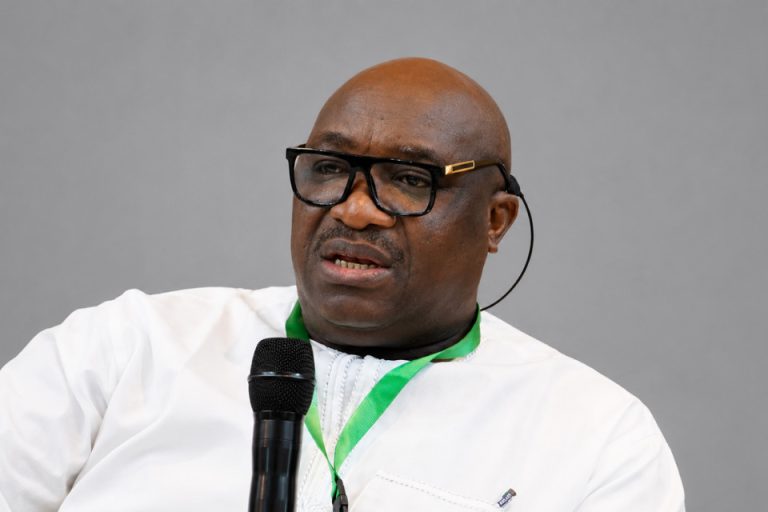
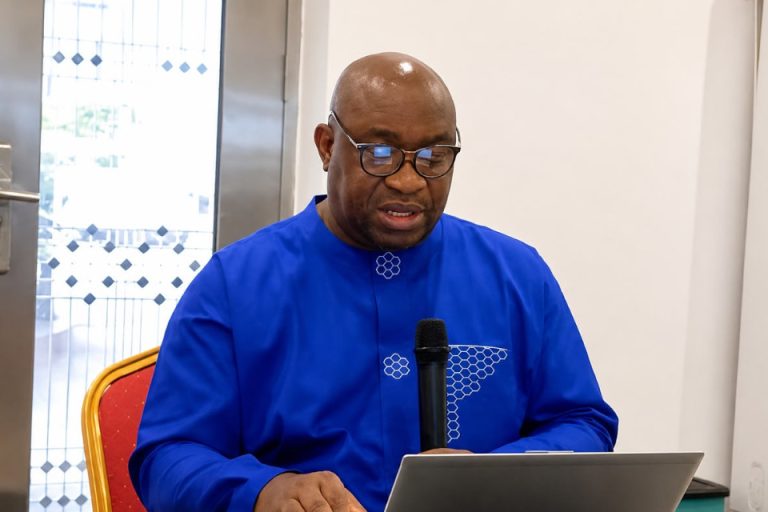
The Executive Director of Media Rights Agenda (MRA), Mr. Edetaen Ojo, has called on African countries to work collaboratively to shape the global agenda on artificial intelligence (AI) by developing a Pan-African approach to AI governance that is grounded in human rights, democratic values, African priorities, and regional cooperation. He stressed that “it is imperative that Africa speaks with a coordinated voice in global AI governance negotiations to be able to have an impact.”
Answering questions in an interview with the “Media Rights Monitor” on a four-year research and advocacy project on AI Pan-Africanism, being implemented by a consortium of four organizations, including MRA, Mr. Ojo said: “Africa cannot afford to be governed by AI rules developed without African participation. We must move from being consumers of AI governance to becoming co-authors of its future.”
The project, titled “Fostering Digital Pan-Africanism in AI Governance through Evidence and Action”, which runs from 2026 until 2030, is funded by the Volkswagen Foundation with a grant of 1,873,314 Euros under its “Change! Fellowships” funding initiative, which supports researchers from all disciplines, including the social sciences, economics, law, cultural studies, and technology, who are collaborating with practitioners and partners outside academia on societal change processes with the goal of actively shaping change.
The project, which is being implemented by the Centre for Media, Communication, and Information Research (ZeMKI) at the University of Bremen in Germany, as well as three civil society partners, namely MRA, the Media Foundation for West Africa (MFWA), and the Association for Progressive Communications (APC), seeks to advance a Pan-African approach to AI governance.
Mr. Ojo argued that Africa should not merely adapt to AI systems, governance models, and regulatory frameworks that were developed elsewhere; the continent must strive to shape the global AI agenda, adding, “Of course, such an approach should foster innovation while safeguarding human rights, reducing inequalities, and promoting Africa’s technological and economic development.”
Pointing out that AI governance is increasingly being shaped by major powers such as the European Union, the United States, and China, he said, although African countries have unique social, economic, cultural, and political realities that require context-specific governance approaches, these are, for the most part, not being reflected in AI governance frameworks.
Mr. Ojo insisted that a Pan-African AI framework must be anchored in human rights principles and norms, particularly freedom of expression, access to information, privacy and data protection, equality and non-discrimination, transparency, accountability, due process, and democratic participation.
According to him, the framework should build on African Union (AU) initiatives, African Commission on Human and Peoples’ Rights (ACHPR) standards, the African Charter on Human and Peoples’ Rights, as well as the Declaration of Principles on Freedom of Expression and Access to Information in Africa.
He also suggested that AI governance should seek to advance African development priorities by encouraging AI applications that improve healthcare, agriculture, education, climate resilience, public administration, access to justice, financial inclusion, local languages, and accessibility for persons with disabilities.
Mr. Ojo stressed that in developing a continental approach, Africa should resist data extraction without fair benefit, the exploitation of African knowledge resources, algorithmic dependence, technological monopolies, and AI systems trained on African data without consent or equitable value-sharing, stating that African data should contribute to African development.
Noting that current AI systems largely privilege a small number of global languages, he insisted that a Pan-African strategy should promote indigenous language models, African datasets, local knowledge systems, cultural diversity, and African content creation.
Mr. Ojo said without intentional investment, many African languages risk remaining invisible in the AI ecosystem.
Insisting that AI governance must address inequality, he suggested that the proposed governance framework should require regular assessment of AI systems for fairness, bias, and accessibility, as AI can reinforce existing inequalities through biased algorithms, unequal access to digital infrastructure, gender disparities, exclusion of rural communities, and discrimination against marginalized groups.
He proposed the adoption of an inclusive process, urging that AI governance should not be designed exclusively by governments and technology companies but should also involve civil society, academia, journalists, consumer groups, youth, women’s organisations, technical experts, persons with disabilities, and the private sector.
Mr. Ojo affirmed that rather than Africa developing 54 separate national AI regulatory regimes, African countries should pursue common principles through regional and continental institutions with priority areas for harmonisation, including data governance, AI ethics, procurement standards, regulatory sandboxes, cross-border research, capacity-building, and talent mobility.
He also called for the expansion of AI research centres, digital literacy programmes, technical training, ethics education, regulatory expertise, and independent oversight institutions in Africa, as well as providing support for journalists and civil society to understand and scrutinise AI systems and their societal impacts.
In addition to a Pan-African AI governance framework aligned with existing continental human rights commitments, Mr. Ojo recommended a continent-wide AI Bill of Rights that would highlight minimum protections for individuals and a coordinated African position in global AI governance forums, to ensure that African priorities influence international norms.
He suggested investment in African AI research, local innovation ecosystems, and computing infrastructure to reduce dependence on external providers; strong, interoperable data protection laws and independent oversight authorities across African countries; and mandatory human rights impact assessments for high-risk AI systems deployed by governments and private actors.
Mr. Ojo also proposed greater transparency from technology companies regarding AI systems operating in African markets, including meaningful explanations of significant automated decisions; dedicated support for AI development in African languages and culturally relevant datasets; and robust civil society participation in AI policymaking at national, regional, and continental levels.
He said: “AI presents Africa with a historic opportunity, not only to accelerate development but also to demonstrate that technological progress and human rights can advance together. A Pan-African approach to AI governance should be rooted in our shared values, responsive to our diverse realities, and ambitious enough to ensure that AI serves the public interest.”
According to him, “By working collectively, African countries can shape AI systems that are transparent, accountable, inclusive, and rights-respecting, while ensuring that the continent is an active architect of the global digital future rather than a passive recipient of decisions made elsewhere.”