The ECOWAS Community Court of Justice has ruled that access to the Internet is a right within the right to freedom of expression and is necessary for the achievement of freedom of expression, the right to access information, and the exercise of many other related human rights.
In its judgment in a suit brought against the Nigerian Government by a journalist, Mr Jide Oyekunle, the Court noted that “in the light of its accessibility and its ability to store and communicate large amounts of information, the Internet plays an important role in improving public access to news and facilitating the dissemination of information in general.”
Stressing that “access to the Internet is a right within the right to freedom of expression”, the Court explained that this understanding informed its judgments in two earlier cases: Association Desblogueurs de Guinue (Ablogui) & ors v. The State of Guinea; and Amnesty International Togo & ors v. Republic of Togo.
It added that the jurisprudence follows the provisions of the United Nations Human Rights Council Resolution 26/13 on the promotion, protection, and enjoyment of human rights on the Internet, where the Council stated that “…same rights that people have offline must also be protected online, in particular freedom of expression, which is applicable regardless of frontiers and through any media of one ’s choice, in accordance with articles 19 of the Universal Declaration of Human Rights and the International Covenant on Civil and Political Rights”.
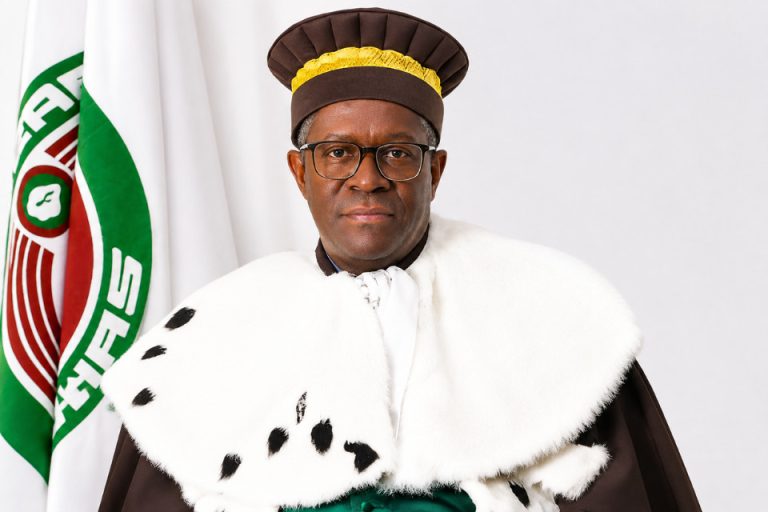
The judgment was delivered by Justice Ricardo Cláudio Monteiro Goncalves, Presiding/Judge Rapporteur; Justice Sengu Mohamed Koroma; and Justice Edward Amoako Asante in a suit filed by a journalist with the Independent newspaper, Mr. Oyekunle who was then Chairman of the Nigeria Union of Journalists (NUJ), FCT Correspondents Chapel, based in Abuja, through his lawyer, Mr. Collins Maidoh-Anene, on June 13, 2025.
In the suit, Mr. Oyekunle claimed that his human rights were violated on August 1, 2024, while he was covering a peaceful protest as a journalist. He alleged that the police fired tear gas at the protesters and that while he was trying to take refuge in a safe place, he was attacked and assaulted by police officers, who seized his mobile phone, and claimed that he was not authorized to perform the live recording of the event. He said his camera was damaged and that he was detained for approximately eight hours on charges of invasion of property and participation in an illegal assembly before he was later released as a result of the intervention of FCT Police Command spokesperson, Josephine Adeh.
In its response, the Federal Government, represented by Mrs. Maimuna Lami Shiru, denied Mr. Oyekunle’s allegations, saying that “Police officers did not act aggressively against any protester and did not violate anyone’s rights during the protest called “End Bad Governance”. The Government insisted that the journalist was “a violent protester, who refused to obey the orders of the police who tried to restrict the access of the protesters to the Three Arms Zone.”
It claimed that the journalist was “legally detained, but released immediately after identifying himself, without his rights being violated,” adding that no officer of the Nigerian Police Force or the Government has injured or attacked any person in the exercise of their legal duties and that no agent of the Government has carried out indiscriminate arrests or attacks against journalists or any other professional category as “All investigations, arrests and proceedings carried out by the Nigerian Police Force have been conducted in accordance with national and international laws.”
In its judgment, the Court noted that freedom of expression is a fundamental human right that is essential for the personal development of the individual, for his political conscience and for his participation in the conduct of public affairs in his country, adding that the “right is essential to protect the freedom of the press.”
According to the Court, “The different regional systems for the protection of human rights and the universal system agree on the essential role played by freedom of expression in the consolidation and dynamics of a democratic society and an invaluable instrument for the defence and protection of human rights.”
It, however, noted that “the right to freedom of expression is not absolute and that its enjoyment may be subject to limitations, and it is up to the Member State to define the conditions for the exercise of the right to freedom of expression.”
But the Court insisted that by the combined analysis of Article 19(3) of the International Covenant on Civil and Political Rights (ICCPR), Articles 9 and 27(2) of the African Charter on Human and Peoples’ Rights (ACHPR), any limitation or restriction of the right to freedom of expression will only be justifiable when it is provided for in the law, has a legitimate objective, and is necessary and proportionate in a democratic society.
In this context, it said that the right to freedom of expression is of paramount importance in any democratic society, and any restrictions on its exercise must take account of rigorous tests of justification. Therefore, any restriction or limitation must satisfy the cumulative tripartite test to be considered a legitimate restriction of the right.
The Court ruled that “Where a decision is taken to impose any form of restriction on freedom of expression, the responsible authorities shall disclose the specific legal provisions for which they are competent and authorised to impose such restrictions.”
It held that the documents presented by Mr. Oyekunle were valid, especially since the Government did not object to them or question their authenticity or veracity in its statement of defence.
The Court noted that despite alleging violence of the protest and that Mr. Oyekunle was a violent protester who refused to obey the warnings of the Police who were trying to prevent the protesters from entering the Three Arms Zone, the Government did not provide evidence to support such claims, although the burden was on it to justify the measures that its agents adopted, such as the use of tear gas and the arrest of Mr. Oyekunle while he was covering the protest.
It also noted that although the Government alleged that the police officers resorted to these measures, they did not show which legal provisions were relied upon to justify such measures, despite the fact that the burden fell on them to do so.
The Court stressed that “whenever a decision is taken to impose any form of restriction on freedom of expression, the responsible authorities must disclose the specific legal provisions for which they are competent and authorised to impose such restrictions” and ruled that “the principle of legality has not been respected in this case.”
It therefore ruled that the Government violated Article 19 of the Universal Declaration of Human Rights (UDHR), Article 19 of the ICCPR, as well as Articles 9 and 27(2) of the ACHPR.
On the claim that his right to personal liberty was violated, the Court noted that “Detention or deprivation of liberty occurs as soon as an individual is forcibly held in a police station or prison or when an authority orders them to remain in a certain place.”
It said, “detention or imprisonment is considered arbitrary when it occurs in breach of national or international law, and this happens whenever there is a lack of legitimacy or reasonable grounds for its decree or maintenance.”
The Court emphasised that “the validity of any arrest depends on its lawfulness and reasonableness,” adding that “it is not sufficient merely for the power to arrest to be provided for by law.”
It noted that the facts alleged by the journalists regarding his detention were corroborated by the evidence that he presented with his application initiating proceedings, namely the photos in online newspapers and a video where police officers can be seen holding him.
Besides, the Court said, the Government admitted that the journalist was detained, although it alleged that the detention was legal, it did not submit any concrete evidence or circumstance to justify that the detention was in accordance with national or international law.
Citing its earlier decision, the Court added that the silence or lack of specific State challenge would allow it to assume as true the facts alleged by the victim when the existing evidence is consistent.
Accordingly, the Court said that, in view of the absence of any evidence presented by the Government to justify that the journalist’s detention was in accordance with national or international law, it finds that the Government violated Mr. Oyekunle’s right to liberty under Articles 9(2) of the ICCPR, Articles 3 and 9 of the UDHR and Article 6 of the ACHPR.
On the journalist’s allegation of the violation of his right to dignity and the prohibition of torture, cruel, inhuman, and degrading treatment, the Court noted that Article 5 of the African Charter, which aims to protect both human dignity and the physical and mental integrity of the individual, prohibits not only torture but also cruel, inhuman or degrading treatment.
It said: “This includes not only actions that cause severe physical or psychological suffering, but that humiliate the individual or force him to act against his will or conscience.”
The Court held that the detailed account of the facts presented by the journalist, supported by the documentary evidence and the video footage submitted by him, is sufficient to establish in the mind of the Court a firm conviction that, during the demonstration on August 1, 2024, while Mr. Oyekunle was covering a peaceful protest, the police fired tear gas at the protesters and that while he was attempting to seek refuge in a safe place, he was dragged away by police officers, who also seized his mobile phone, claiming that he was not authorised to livestream the event; he was detained for approximately eight hours, on charges of trespassing and participating in an unlawful assembly, and was subsequently released following the intervention of the spokesperson for the FCT Police Command, Josephine Adeh.
It ruled that such acts are humiliating and demeaning to anyone placed in the journalist’s situation; they demonstrate a lack of respect, undermine human dignity, and give rise to feelings of fear, as alleged by Mr. Oyekunle, distress or inferiority capable of breaking an individual’s moral and physical resilience.
It held further that the actions of the “agents of order and of security” regarding the journalist constitute “torture” in the light of Article 1 of the Convention Against Torture (CAT).
Noting that there is no information in the case file as to whether the Government launched
an investigation and, if so, what the outcome was, the Court held that “an unlawful act that violates human rights and which is not initially directly attributable to a State may give rise to the State’s international responsibility, not for the act itself, but for its failure to exercise due diligence to prevent the violation or to respond to it as required by the African Charter.”
It also noted that the Government did not specify the measures it had taken to address the human rights violations, including the arrest and trial of the perpetrators and the possible payment of compensation to the journalist, and ruled that the Government “has failed to fulfil the positive obligation imposed upon it by Article 1 of the African Charter and Article 2 of the CAT, which it has ratified, in particular, to protect the Applicant against abuses resulting from the actions of its police officers, by failing to demonstrate that it had taken adequate measures to ensure an independent and effective investigation into the complaint lodged by the Applicants in which it accused the Respondent’s officers of committing acts of torture.”
The Court held that the journalist’s human right not to be subjected to torture or other cruel, inhuman or degrading treatment or punishment, as guaranteed by Articles 1 and 5 of the African Charter, Articles 1, 2 (1), 4, 10 and 11, 12, and 13 of the CAT, 7 and 10(1) of the ICCPR, and 5 of the UDHR, has been violated by the Government.
On the journalist’s alleged violation of his property rights, the Court noted that as a general rule, the right to property requires that the owner should not be subject to any interference in the enjoyment of their property, particularly from the State, and ruled that the confiscation of his mobile phone did not comply with the requirement of “legality” set out in Article 14 of the African Charter.
It is restated that “Member States are held liable for the acts or omissions of their officials, institutions or bodies acting in an official capacity, even if such acts were committed outside the scope of their official authority or in breach of national law. Thus, when the agents of a State violate the rights of an individual or individuals, such violations shall be attributable to the State, whether or not they were authorised by it, thereby establishing the State’s international responsibility for those acts or omissions.”
Consequently, it said, the conduct of the police officers who confiscated the journalist’s mobile phone, thereby preventing him from using it, is attributed to the Government, which is considered indirectly liable and ruled that the Government violated his right to property, as enshrined in Article 17 of the UDHR and Article 14 of the African Charter.
On the alleged breach of the right to privacy, the Court said, although the journalist claimed that the actions to seek, delete content, place a listening device on his mobile phone and to monitor him, including his family and his home, constituted a violation of his right, he did not submit any evidence to the Court to show that the Government’s agents deleted content from his phone, bugged the phone, or monitored him, including his family and his home.
It therefore ruled that he failed to discharge the onus on him to prove the allegation and accordingly found that the Government did not violate his right to privacy.
The Court said, having regard to the nature and diversity of the human rights infringed, namely freedom of expression, liberty and security, dignity and the prohibition of torture, and property rights, and taking into account the traumatic consequences for the journalist, ruling based on equity and reasonableness, it was awarding him N10 million as compensation for non-pecuniary damage.
It stated that although the parties said nothing about the payment of expenses, it considered that the Government, as the losing party, should bear the costs of the proceedings, which should be settled by the Chief Registrar of the Court, Dr. Yaouza Ouro-Sama.
The Court ordered the Government to submit to it within three months of the date of service of the judgment on it, a report on the measures it has taken to implement the orders made.