Stakeholders in the Nigerian information ecosystem have called for human rights-respecting measures to address the harmful effects of disinformation, misinformation and hate speech, particularly ahead of the 2027 General Elections, urging that responses should follow due processes of law, be evidence-based, and constitute the least restrictive means available for tackling the problem.
The stakeholders, made up of Government regulators, civil society organisations, media experts, and international development organizations and agencies, among others, proposed stronger coordination among key actors and a multi-stakeholder collaboration to address growing threats to information integrity ahead of the elections.
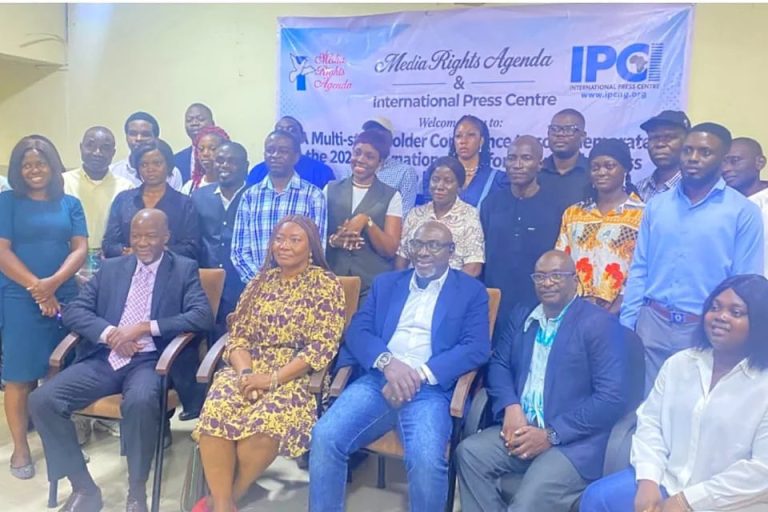
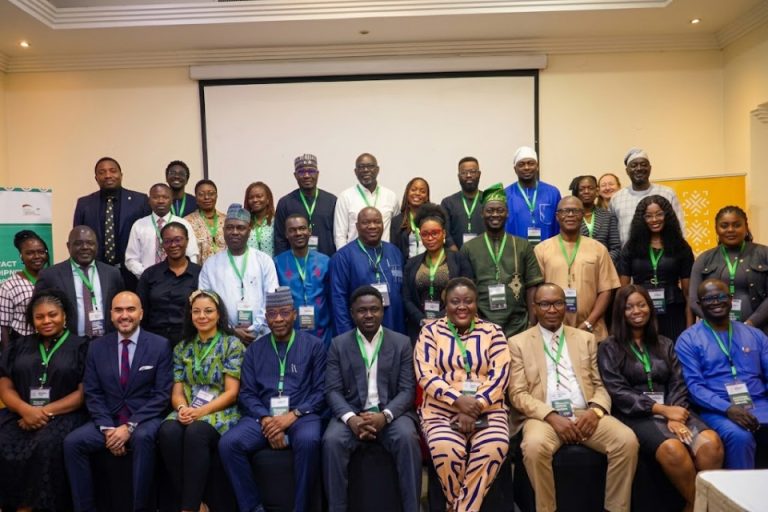
Their recommendations were made at a two-day “Meeting of Nigerian Regulators on Information Integrity in the Context of the Upcoming Elections” held in Lagos on May 12 and 13, 2026, where participants examined the challenges posed by misinformation, disinformation, hate speech, online harassment, algorithmic manipulation, AI-generated content, voter suppression narratives, and foreign influence in Nigeria’s digital information ecosystem.
The meeting was organised by the National Democratic Institute (NDI), the United Nations Educational, Scientific, and Cultural Organisation (UNESCO), the Economic Community of West African States (ECOWAS), Media Rights Agenda (MRA), and TechSocietal.
It was funded by Global Affairs Canada (GAC) and Germany’s Gesellschaft für Internationale Zusammenarbeit (GIZ), through the Organisational Development (OD)/ISE II Programme and the EU Support to ECOWAS in Peace, Security and Governance (EPSG) Project, co-financed by the European Union (EU) and the German Federal Ministry for Economic Cooperation and Development (BMZ).
The dialogue was convened to familiarise Nigerian regulators with the Guide for Regulators to Implement the Information Integrity Model Policy Framework in West Africa and the Sahel and to explore how its recommendations could be adapted to Nigeria’s legal, institutional, and digital governance environment, particularly in preparation for the 2027 electoral cycle.
The framework is structured around four regulatory pillars, such as transparency, proportionality, human rights compliance, and platform accountability, and five ecosystem pillars, including public access to information, media and information literacy, platform engagement, and multi-stakeholder collaboration.
Participants noted that Nigeria, with over 150 million internet users and a rapidly evolving digital landscape, faces increasing risks from harmful online content capable of undermining democratic processes, public trust, electoral integrity, and human rights.
Discussions were grounded in the Praia Policy Framework for Information Integrity in West Africa and the Sahel, adopted in Cabo Verde in 2025, as well as the Abidjan Voluntary Protocol of 2024. Both frameworks advocate rights-based, multi-stakeholder approaches to addressing information integrity challenges while safeguarding freedom of expression and other fundamental rights, emphasising an ecosystemic view of information as a public good, moving away from purely punitive measures toward resilience-based governance.
Participants observed that the speed and reach of misinformation and disinformation continue to outpace institutional responses, particularly where there are technical gaps, weak monitoring systems, limited expertise, and delayed responses from regulators and digital platforms. They warned that harmful information practices can erode confidence in elections, discourage citizen participation, deepen insecurity, and disproportionately affect vulnerable groups, including women and persons with disabilities.
The meeting brought together representatives of several Nigerian regulatory institutions with responsibilities relating to digital governance, information integrity, elections, cybersecurity, human rights, telecommunications, broadcasting, and access to information.
Among the participating regulatory bodies were the Independent National Electoral Commission (INEC), National Broadcasting Commission (NBC), National Human Rights Commission (NHRC), National Information Technology Development Agency (NITDA), the Nigerian Police Force Cybercrime Unit (NPF-NCCC), the Federal Ministry of Information and National Orientation, the Federal Ministry of Justice and its Freedom of Information (FOI) Unit, the Advertising Regulatory Council of Nigeria (ARCON), and the House of Representatives Committee on Media and Public Affairs.
Representatives of civil society organisations and media-focused groups, including MRA, TechSocietal, Paradigm Initiative, the Nigerian Guild of Editors (NGE), Yiaga Africa, the Centre for Journalism Innovation and Development (CJID), the International Press Centre (IPC), Accountability Lab, Article 19 (West Africa), FactsMatterNG, TechHer, Digi Africa Lab,
Media and Information Literacy and Intercultural Dialogue Foundation (MILID Foundation), Socio-Economic Rights and Accountability Project (SERAP), and Wikimedia Foundation, among others, also participated in the meeting.
A major focus of the meeting was a mapping of Nigeria’s distributed regulatory landscape and the identification of areas where institutional mandates intersect. Participants highlighted three key areas requiring greater coordination: platform governance, data access and privacy, and election and crisis response.
They stressed the importance of developing joint protocols, rapid-response mechanisms, information-sharing systems, and clearly designated lead agencies to ensure coherent and timely responses during periods of heightened risk, particularly elections and other national emergencies.
Participants also reviewed the preparedness plans of various institutions. INEC highlighted efforts to strengthen information integrity management and transparency around its Electoral Result Viewing Portal (IReV), while the NBC outlined its approach to co-regulation and real-time monitoring. NITDA reported the establishment of an Election Monitoring Situation Room and direct escalation channels with technology platforms. The NHRC discussed its automated complaints-handling systems and civic monitoring initiatives, while ARCON highlighted its focus on regulating political advertising during election periods.
The meeting identified several structural challenges confronting regulators, including overlapping institutional mandates, inadequate technical capacity, limited moderation of online content in local languages, delays in engagement by global technology platforms, and increasing polarisation within the digital content ecosystem.
To address these concerns, participants recommended stronger inter-agency coordination, the development of cooperation frameworks and codes of practice, enhanced engagement with digital platforms, greater investment in nationwide media and information literacy programmes and campaigns, and stronger regional collaboration through ECOWAS and the African Union.
Participants further emphasised that responses to misinformation and disinformation should not rely solely on restrictive regulatory measures. Instead, they advocated approaches centred on transparency, accountability, public education, independent research, platform engagement, and evidence-based policymaking.
They also stressed that measures adopted to address harmful online content should pursue legitimate aims, comply with international human rights standards, and be necessary and proportionate to avoid undermining freedom of expression and public trust.
The meeting concluded with a shared recognition that no single institution can effectively protect information integrity in isolation. Participants agreed that sustained collaboration among regulators, civil society organisations, journalists, fact-checkers, researchers, media practitioners, and regional institutions will be essential to strengthening democratic information ecosystems, protecting human rights, and safeguarding electoral integrity ahead of Nigeria’s 2027 elections.
The full meeting report can be accessed here.