Journalists from across the world have called for stronger action against the abuse of spyware and unlawful surveillance, warning that increasing monitoring of journalists and their sources poses a serious threat to media freedom and democratic accountability.
The call was unanimously endorsed by delegates at the Congress of the International Federation of Journalists (IFJ) held in Paris from May 4 to 7, 2026, following the presentation of a report examining the impact of surveillance on journalists, independent media, and confidential sources.
The report, titled Global Surveillance of Journalists: A Technical Mapping of Tools, Tactics, and Threats, was presented by researcher Samar Al Halal as part of the EU-funded Brave Media project.
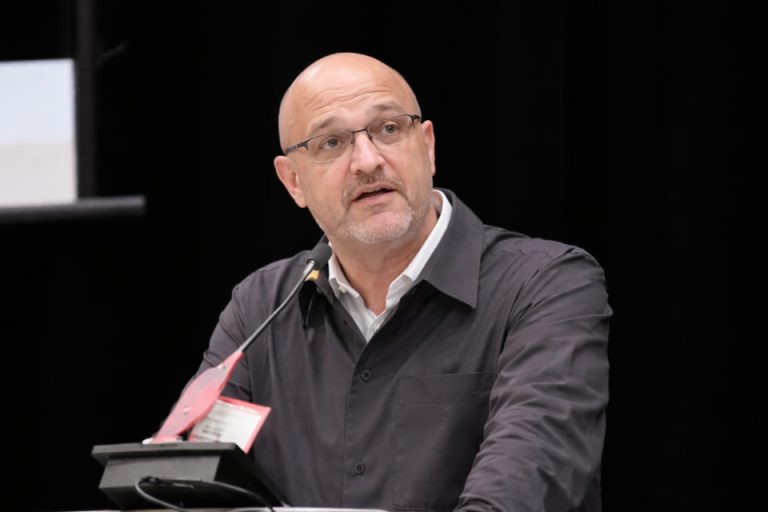
Addressing delegates at the Congress, Al Halal warned that surveillance has far-reaching implications for investigative journalism and press freedom.
“When journalists are monitored, self-censorship becomes normal,” she said, adding that “even the perception of being monitored is enough to change behaviour.”
She further noted that in conflict zones and other dangerous contexts, surveillance data can increase physical risks for journalists and others seeking to hold power accountable.
Al Halal also stressed that the issue extends beyond technology, describing it as a political challenge tied to the misuse of surveillance tools in ways that undermine democratic accountability and press freedom.
She called for stronger legal safeguards to clearly define which surveillance tools can be used, under what circumstances, and by whom. She also advocated sanctions for the misuse of spyware, stricter democratic oversight of government procurement processes, and increased accountability within the spyware industry.
In addition, Al Halal highlighted the need for greater awareness among journalists and media organisations through improved safety processes, risk assessments, and training.
Representatives of journalists’ unions from different regions also shared experiences of surveillance abuses and efforts to challenge them. Seamus Dooley, representing the National Union of Journalists (NUJ) in the UK and Ireland, and Samira de Castro, of the Brazilian journalists union Federação National dos Jornalistas (FENAJ), highlighted how abuses in their regions had threatened media freedom but also how journalists’ unions, using the law and public campaigns, had been able to win justice for those unlawfully targeted and expose those seeking to undermine media freedom.
Delegates at the Congress urged the IFJ to lead global advocacy efforts focused on stronger regulation of the spyware industry, greater transparency in spyware exports and government procurement, enhanced accountability for telecommunication providers, safeguarding of rights to encryption and anonymity, greater investment in regional forensic capacity, and enhancing safety training in journalism education.
Meanwhile, the Secretary-General of the IFJ, Anthony Bellanger, said delegates from around the world had shared similar experiences of unlawful, abusive, and unregulated surveillance targeting journalists and their sources, which threatens media freedom and leads to greater self-censorship, including physical threats and attacks. “It is time governments, telecoms companies and regulators acted to protect media freedom,” Bellanger said.
He added that the IFJ would prioritise efforts to expose unlawful surveillance, equip journalists with tools to understand and protect themselves from threats, and launch advocacy campaigns at both global and national levels to demand stronger laws and regulation protecting journalism and journalists.
Read IFJ’s interview with Samar Al Halal here.
The IFJ represents more than 600,000 journalists across 146 countries. For more information, please contact IFJ at +3222352216.