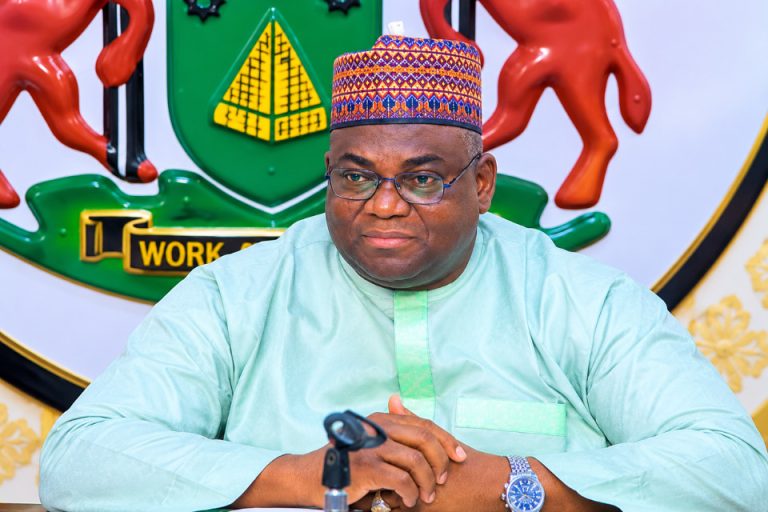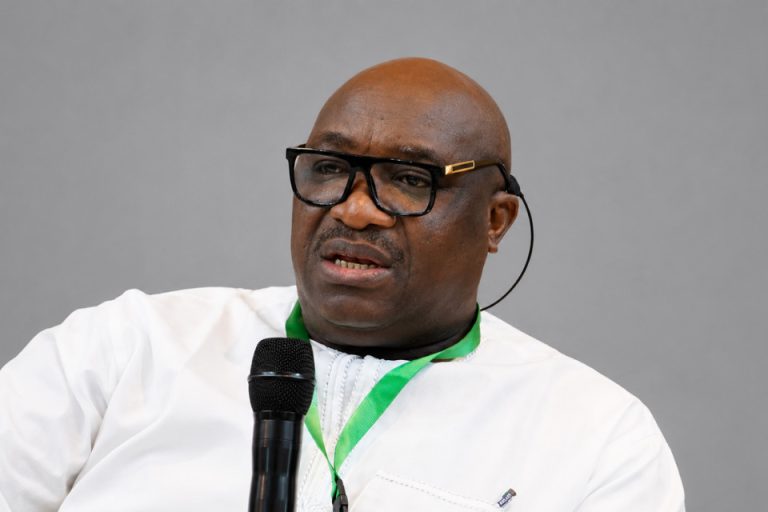
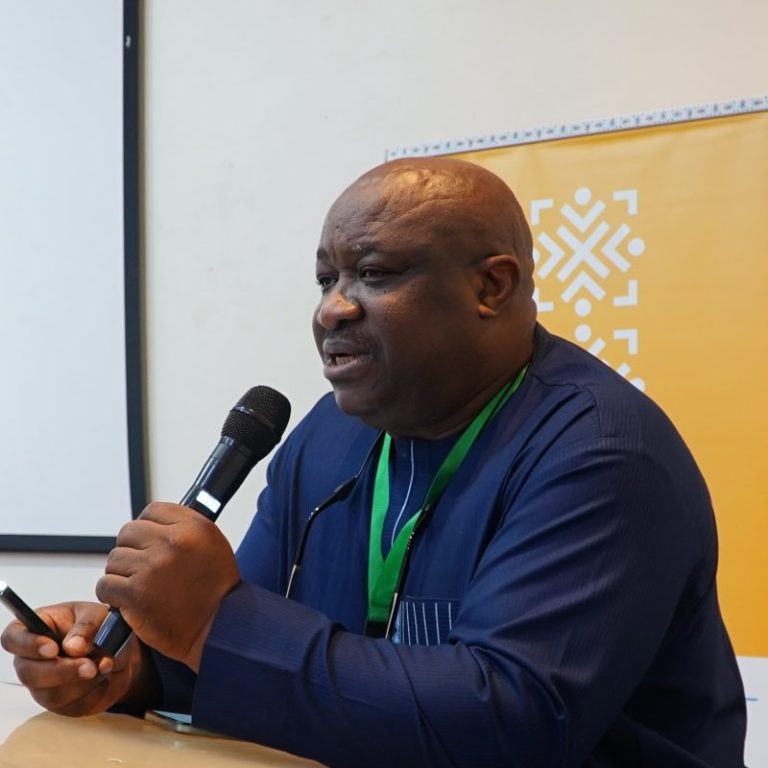
The Executive Director of Media Rights Agenda, Mr. Edetaen Ojo, has said that countering disinformation or hate speech should not be used as an excuse to suppress freedom of expression, as he called on countries in West Africa and the Sahel to avoid applying disproportionate sanctions and other extreme measures in combating the spread of false, misleading or harmful information in the society.
Speaking at a “Nigeria Regulators Meeting on the Operationalisation of the Practical Guide for Regulators to Promote Information Integrity in the Context of Upcoming Elections” held in Lagos on May 12 and 13, 2026, Mr. Ojo said measures to address the harmful effects of disinformation must serve legitimate aims, be necessary and proportionate, to avoid undermining information integrity and eroding public trust, adding that States should ensure that responses to disinformation follow the due process of law, are justified, evidence-based, and constitute the least restrictive means available.
These obligations, he said, are contained in the Praia Policy Framework for Information Integrity in West Africa and the Sahel, adding that 15 Governments in West Africa and the Sahel that signed on to the document thereby made commitments when they adopted the Framework.
The meeting was organized by the National Democratic Institute (NDI), in collaboration with the United Nations Educational, Scientific and Cultural Organization (UNESCO), Media Rights Agenda (MRA), and Techsocietal. The meeting was funded by Global Affairs Canada (GAC) under a long-term project support to NDI, and by Deutsche Gesellschaft für Internationale Zusammenarbeit (GIZ), a German federal enterprise that implements international cooperation and sustainable development projects globally on behalf of the German government. The GIZ support was through the Organisational Development (OD)/ISE II Programme and the EU Support to ECOWAS in Peace, Security and Governance (EPSG) Project, co-financed by the European Union (EU) and the German Federal Ministry for Economic Cooperation and Development (BMZ).
In attendance were representatives of UNESCO, the Economic Community of West African States (ECOWAS), and regulatory bodies, including the National Broadcasting Commission (NBC), National Information Technology Development Agency (NITDA), Independent National Electoral Commission (INEC), National Human Rights Commission (NHRC), the Federal Ministry of Justice (FMOJ) and its Freedom of Information (FOI) Unit, the Federal Ministry of Information and National Orientation, the Nigerian Police Force Cybercrime Unit, and Advertising Regulatory Council of Nigeria (ARCON).
Civil society working to counter election disinformation and promote human rights and responsible social media usage also participated, including MRA, TechSocietal, Accountability Lab, Centre for Journalism Innovation and Development (CJID), Digi Africa Lab, the International Press Centre (IPC), FactMattersNG, Media and Information Literacy and Intercultural Dialogue (MILID) Foundation, the Nigerian Guild of Editors (NGE), Paradigm Initiative (PIN), Socio-Economic Rights and Accountability Project (SERAP), TechHer, Wikimedia Foundation, and Yiaga Africa, among others.
Making a presentation on the topic: “Overview of the Praia Policy Framework for Information Integrity in West Africa and the Sahel,” Mr. Ojo explained that on September 3 to 5, 2025, UNESCO and the Government of Cabo Verde convened a “Regional Conference on Information Integrity in West Africa and the Sahel”, which took place in Praia, the capital city of Cabo Verde.
According to him, the Praia Policy Framework emerged as an outcome document from the conference, following its adoption by the Ministerial Track on September 5, 2025.
Mr. Ojo described the Framework as a comprehensive regional policy instrument designed to guide governments, regulatory institutions, digital platforms, civil society, media organizations, and other stakeholders in addressing the growing challenges of disinformation, misinformation, hate speech, and broader threats to information integrity in the digital age.
He explained that the Framework provides a broad roadmap for strengthening information integrity in West Africa and the Sahel and adopts a strong rights-based and multi-stakeholder approach to address the challenge, thus emphasizing that efforts to combat harmful information practices must be consistent with international human rights standards, including freedom of expression, access to information, privacy, and media freedom.
Mr. Ojo said that although the Framework acknowledges that digital transformation in the region has expanded information access, freedom of expression and civic participation, it has also brought risks that threaten representative processes and social cohesion, while it also disproportionately impacts vulnerable and marginalized groups. He added that the Framework emphasizes that efforts to combat harmful information practices must remain consistent with international human rights standards and made reference, in particular, to key rights such as freedom of expression, access to information, privacy, and media freedom.
He noted that the Framework recognizes that threats to information integrity are transnational and increasingly amplified by social media platforms, algorithmic systems, AI-generated content, political manipulation, electoral disinformation, and coordinated influence operations.
Mr. Ojo pointed out that the document urges Member States to develop transparent regulatory approaches for digital platforms, require platforms to conduct algorithmic risk assessments, improve transparency regarding content moderation systems, address disinformation in local languages, and ensure accessible appeals and redress mechanisms for users.
He said the Framework also encourages transparency in advertising systems, oversight of automated recommendation systems, accountability for AI-driven content amplification, and protection against abusive micro-targeting and data misuse.
It pays special attention to periods of heightened vulnerability, such as elections, armed conflicts, public health emergencies, and political crises; and calls for early warning systems, rapid response coordination mechanisms, monitoring of disinformation campaigns, transparency by state actors, and enhanced safeguards against incitement and manipulation.
Another major pillar of the Framework, according to Mr. Ojo, is the promotion of digital, media, and information literacy, which is seen as a long-term strategy for strengthening societal resilience against disinformation and reflects a disposition towards a preventive rather than purely punitive approach to information integrity.
He said the Framework, therefore, encourages Member States to integrate media and information literacy into formal and non-formal education, conduct public awareness campaigns, support vulnerable and marginalized groups, promote literacy initiatives in local languages, and strengthen public understanding of digital technologies and AI systems.
In preserving information integrity, he said, the Framework underscores the important role of independent media, fact-checking organizations, civil society organizations, researchers, and academic institutions.
Mr. Ojo noted that Member States are therefore encouraged to create enabling environments for these actors to function, protect them from political interference, support capacity building, facilitate access to information as the foundation of accountable governance and institutional trust, and ensure their inclusion in policy development processes.
He outlined recommendations in the Framework to include specialized training for regulators, judges, electoral bodies, and law enforcement agencies; strengthening technical expertise in digital governance; building regulatory independence; and establishing oversight and accountability structures.
Mr. Ojo said the document also proposes the establishment of parliamentary oversight mechanisms, the adoption of judicial review procedures, the setting up of independent regulatory bodies, and public reporting obligations for regulatory bodies.
In addition, he said, given the cross-border nature of digital information flows, the Framework recommends coordination among countries in West Africa and the Sahel and advocates the harmonization of legal and regulatory frameworks, regional engagement with major digital platforms, shared knowledge systems, joint capacity-building programmes, and collaborative governance arrangements.
Mr. Ojo stressed that in adopting the Framework, Governments of countries in West Africa and the Sahel, agreed to two key commitments, namely to collaborate with other stakeholders to advance the objectives, promote the principles, and take appropriate measures to operationalize the actions set out in the framework to preserve information integrity in West Africa and the Sahel, as well as to adopt or adapt, in accordance with each country’s constitutional processes and consistent with the provisions of the Framework, policies, laws or other measures as may be necessary to give effect to the principles and guidelines outlined in the document.
He highlighted some specific principles and guidelines that the signatory governments are required to give effect to, including that:
• Measures to address the harmful effects of disinformation must serve legitimate aims, be necessary and proportionate, to avoid undermining information integrity and eroding public trust, and Member States shall ensure that responses to disinformation follow due processes of law, are justified, evidence-based, guided by the risk assessment framework, and constitute the least restrictive means available, as contained in Paragraph 59 of the Framework.
• Countering disinformation or hate speech shall not be used to suppress freedom of expression, and Member States shall avoid disproportionate sanctions, arbitrary content takedowns, extreme measures such as internet shutdowns, and undue obligations on journalists, content creators, and civil society organisations, as per Paragraph 60.
• States shall ensure that regulatory bodies responsible for information, privacy, and media are equipped through training and appropriate tools to apply human rights frameworks and respond to technological developments and that they have the technical capacity to make informed decisions and assess risks and opportunities linked to emerging technologies and should report regularly to the public, pursuant to Paragraph 89.
• States shall adopt and enforce professional codes of conduct prohibiting the use of public office to spread false or manipulated information and that public officials must uphold the highest standards of transparency, accuracy, and responsibility, particularly during crises, elections, and conflicts. In addition, advocacy by State actors that incites discrimination, hostility, or violence shall be explicitly prohibited in accordance with international human rights law, as contained in Paragraph 91.
Mr. Ojo noted that the Framework is founded on the recognition that combating disinformation cannot rely only on restrictive regulation but must also involve transparency, information literacy, institutional accountability, independent media, civil society participation, and rights-based governance approaches.
He urged the participants to strive to give effect to the principles and commitments.