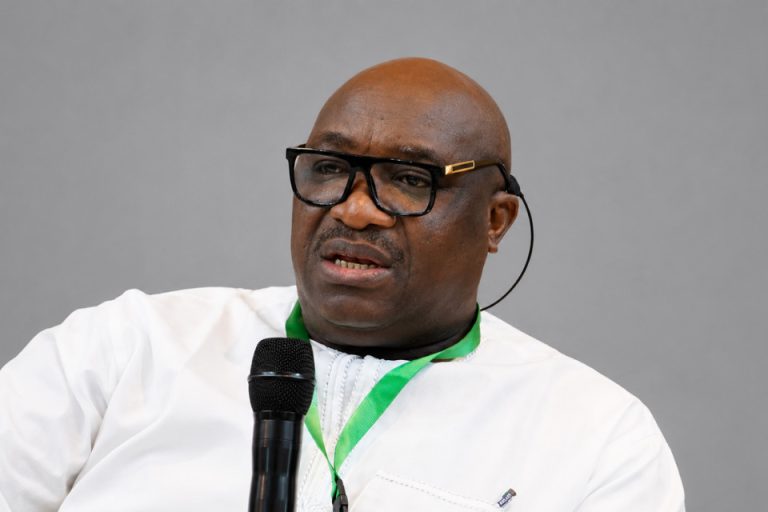
The Deputy Executive Director of Media Rights Agenda (MRA), Mr. Ayode Longe, has called on the National Assembly to go beyond receiving the annual Freedom of Information (FOI) compliance reports from the office of the Attorney-General of the Federation (AGF) and reform the process to make the reporting meaningful.
He urged the National Assembly and its relevant committees, including the FOI Committee of the House of Representatives to reform the reporting process by reviewing the annual reports submitted by the AGF, identifying defaulting public institutions and gaps in the reports, holding hearings with a view to seeking better implementation, demanding compliance plans; applying legal, political and financial pressure on defaulting Ministries, Departments and Agencies (MDAs), and reporting back to the public.
Answering questions in an interview with the Media Rights Monitor on how effective oversight can improve implementation of the FOI Act in Nigeria, Mr. Longe noted that the Act, enacted in 2011, is a powerful tool that can ensure transparency if effectively implemented, observing that the law is intended to shine the light in dark places and expose corruption and wrongdoings.
He explained that the Act not only grants a right of access to government-held information and records but also contains clear procedures for citizens to access the information and records, adding that “effective implementation of the FOI Act would mean that citizens are actively using of the law to request information and records, and that public institutions are complying fully by releasing such information, which will then open up government and ensure transparency and accountability, citizens’ participation, and ultimately, good governance.”
Mr. Longe noted that, to ensure effective implementation of the Act, it gives the Attorney-General of the Federation broad oversight responsibility over all public institutions, explaining that ideally, as in many other jurisdictions, the oversight responsibility is given to an independent body in the form of an Ombudsman or Information Commissioner, who also serves as the first line of administrative redress mechanism for enforcement, before an FOI matter is taken to court where a requester is not satisfied with the outcome of his request.
According to him, the Act provides oversight on two levels: firstly, by the Attorney General of the Federation, and secondly, by committees of the two chambers of the National Assembly, which are described in the Act as the Committee on Government Reform Oversight of the House of Representatives and the Committee on Government Affairs and the Judiciary of the Senate.
Mr. Longe explained that, among other oversight responsibilities, the office of the AGF is to collate and present a report of the annual compliance reports submitted by each public institution and notify the National Assembly Committees by April 1 every year of such reports and make them available to the committees in hard copies as well as by electronic means.
He added that the Act also mandates the AGF to develop reporting and performance guidelines in connection with reports required by the Act and ensure that all institutions to which the Act applies comply with the provisions of the Act.
However, Mr. Longe lamented that over a decade after its enactment, implementation of the Act remains alarmingly weak, pointing out that a central reason for this weak implementation is the failure of the oversight structures, the mechanisms designed to ensure compliance, to function effectively and ensure that the Act achieves its purpose.
He acknowledged an unwillingness by public institutions to comply with their obligations under the Act, but noted that there is also a general apathy among Nigerians in using the Law, based on an assumption that the law will not work, and in some circles, a belief that the law has been watered down and that as a result cannot achieve what access to information laws in other jurisdictions are achieving.
Mr. Longe pointed out that beyond these FOI oversight responsibilities, some weaknesses plague the office of the AGF, which weaken its powers to effectively perform its oversight functions, noting that the AGF combines his office with that of the Minister of Justice, is a political appointee, and is therefore not independent but rather, under the control of and loyal to his principal, the President.
He also noted that the office of the AGF cannot exercise any supervisory powers over other MDAs like the Office of the Head of the Civil Service of the Federation (OHCSF) does, explaining that MDAs do not see themselves as accountable to, or obliged to take orders from, the Attorney-General, as he cannot sanction them.
On the role of the National Assembly, Mr. Longe observed that although the Act says the AGF “shall notify” the relevant National Assembly committees not later than April 1 of the year in which each report is issued, it is silent on what these Committees should do with the report.
He argued that, having been given oversight functions by the Act, the committees have supervisory roles over the implementation of the Act, especially as the Legislature frequently exercises its powers through committees that hold oversight functions over MDAs. Besides, he said, it is expected that with the constitutional powers that the National Assembly wields, the Committees should take steps to address issues around the effective implementation of the Act, which it does not appear to be doing.
Mr. Longe stressed that beyond receiving the annual FOI reports from the office of the AGF every year and dumping them somewhere in the National Assembly complex where they gather dust, these committees should take steps to review the reports, identify defaulters and gaps, hold hearings with a view to seeking better implementation, demanding compliance plans, applying legal, political, financial pressure on defaulting MDAs, reporting back to the public, and pushing reforms where needed.
He said organisations like Media Rights Agenda (MRA) that are at the forefront of pushing for the effective implementation of the FOI Act and ensuring transparency and accountability in governance are always available and ready to bring ideas to the table and work with the Committees to effectively implement the Act.
Mr. Longe also suggested that Nigeria should consider setting up an independent ombudsman to oversee the implementation of the Act and effectively adjudicate administratively as a first remedial administrative step, where requesters are not satisfied with the response they get from public institutions.
He argued that setting up an independent ombudsman would help resolve some of the challenges confronting the effective implementation of the Act and reduce the number of FOI cases that go to court, and that, being an independent body, it would also be able to carry out adequate sensitisation activities around FOI implementation, and these would also increase the level of implementation and effectiveness of the Act.