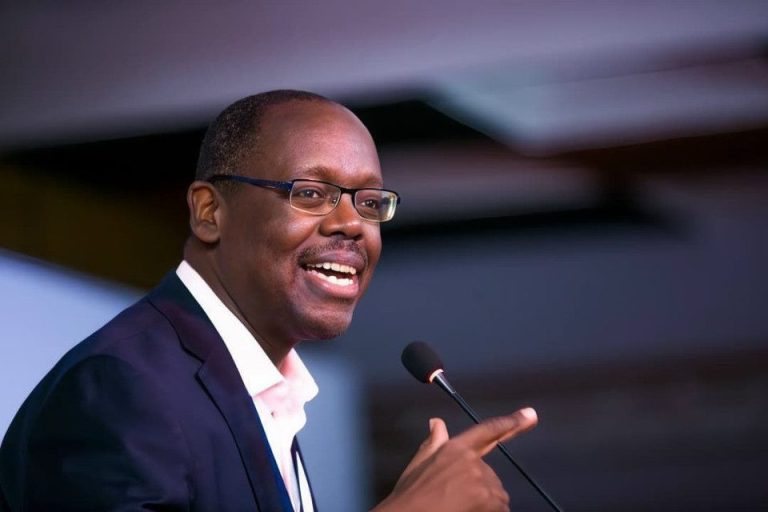
Five of the world’s ten strongest Right to Information (RTI) frameworks were advanced through the Open Government Partnership (OGP), according to Mr. Aidan Eyakuze, the Partnership’s Chief Executive Officer, in an open letter stressing that the future of the world needs governments to embed openness into how they decide and how they act and demands that political leaders strengthen trust through transparency, participation, and accountability.
In the open letter on the OGP’s 15th anniversary, the former Tanzanian civil society leader recalled that the OGP was launched in September 2011 “on the premise of this simple but radical and bold idea: that governments should serve the people, not the other way around. It sounds conceptually obvious, intuitive, even. But in practice and for millions around the world, it remains out of reach.”
Noting that the world is changing fast and in uncomfortable ways with rising polarization, declining trust in government, pressure on civic space, and the reality that collective institutions are hardly keeping pace with the challenges people face in their daily lives, he insisted that the last 15 years of the OGP “have shown that open government works and that our Open Government Partnership is delivering strong results.”
Mr. Eyakuze acknowledged that “Our fifteenth anniversary arrives at a difficult global moment. The multilateral system that once provided guardrails and shared rules of engagement is under serious pressure. Geopolitical fractures threaten the cooperation on which collective progress and shared prosperity depends. The decisions governments are taking now, on artificial intelligence, climate, public finance, and security, will shape the lives of many future generations.”
However, he said, “it is precisely now that our core values as a Partnership matter most,” arguing that “We know that inclusive and resilient institutions are better able to respond to our shared challenges. We know that transparency and accountability reduce corruption risks and lead to better outcomes. We know that meaningful participation leads to more effective and legitimate policies. And we know that open societies are more competitive, more innovative, and more inclusive.”
Mr. Eyakuze said that although the OGP was born in a different geopolitical context, it was designed for this moment, describing it as “an action-oriented, pragmatic, coalition-based platform, grounded in the premise that governments and civil society can achieve together what neither can achieve alone.”
He explained that in the face of mounting global pressures and uncertainty, the Partnership is adapting so that it can continue doing its hard work in the most effective way possible, which is why, during this anniversary year, it is renewing the Partnership in two important ways, first by refreshing its Action Framework to give it the agility fit for current and future conditions and secondly by upgrading member services to deliver a stronger universal offer for all.
Mr. Eyakuze said: “We are looking to the future with confidence in our platform, and with a clear-eyed view of what only open government can deliver: more open, resilient, and prosperous societies.”
He reminded OGP members that many of them are already using the Partnership to forge into frontier territory by tackling algorithmic accountability, the transparency of artificial intelligence (AI) systems and democratic digital governance; promoting inclusive economic growth by fighting against illicit financial flows and by ensuring a transparent and participatory climate and environmental action; exploring proactive disclosure of public information as the default; and drafting national strategies to protect and promote civic space and mainstream participation in decision making.
Mr. Eyakuze stressed that “The future needs all of us. It needs governments to embed openness into how they decide and how they act. It demands of political leaders to strengthen trust through transparency, participation, and accountability. It calls for civil society to continue pushing for change, proposing solutions, and holding the line, even when the space to do so is contested. It requires donors and partners to invest in what works and to help scale it. Most of all, it will require us to remember why we started.”
Remarking that all the reformers who have been part of the OGP journey have made all the difference through their work and have laid the foundation for what comes next, but he warned that “the road ahead will demand even more of our Partnership.”
Mr. Eyakuze said while the past 15 years were about proving that positive change is possible, the next 15 years will be about making that change inevitable.