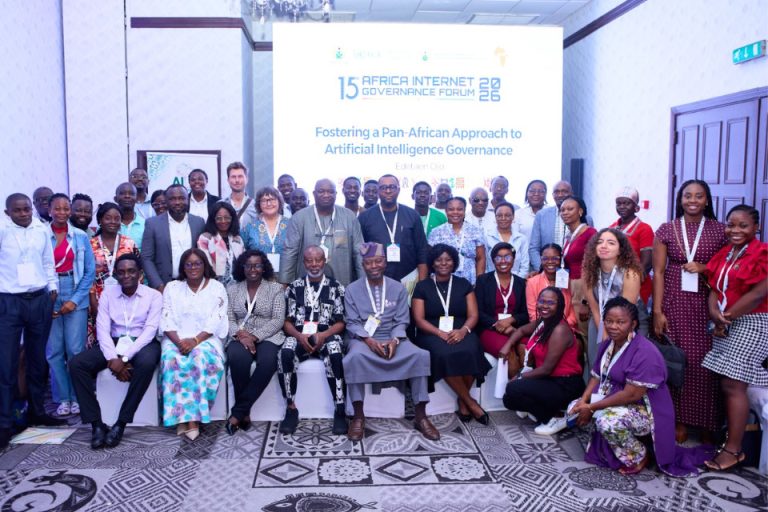
Stakeholders participating in a focus group discussion on artificial intelligence (AI) governance have called for stronger African collaboration, investments in digital infrastructure and research, and a rights-based approach to AI development and deployment, stressing that the continent must play a meaningful role in shaping technologies increasingly affecting its people.
The call was made at a focused group discussion on Fostering a Pan-African Approach to Artificial Intelligence Governance, organised by Media Rights Agenda (MRA) on November 2, 2026, at the 15th Africa Internet Governance Forum (AfIGF), held at Labadi Beach Hotel in Accra, Ghana.
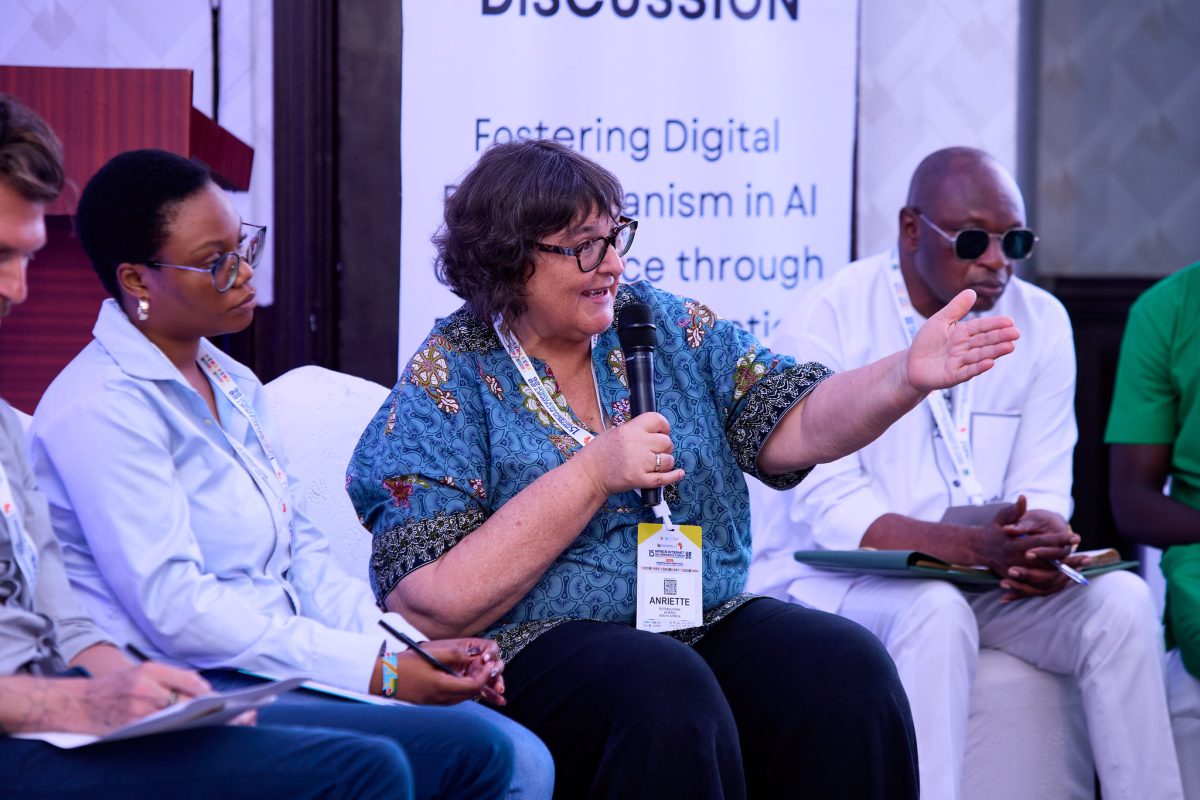
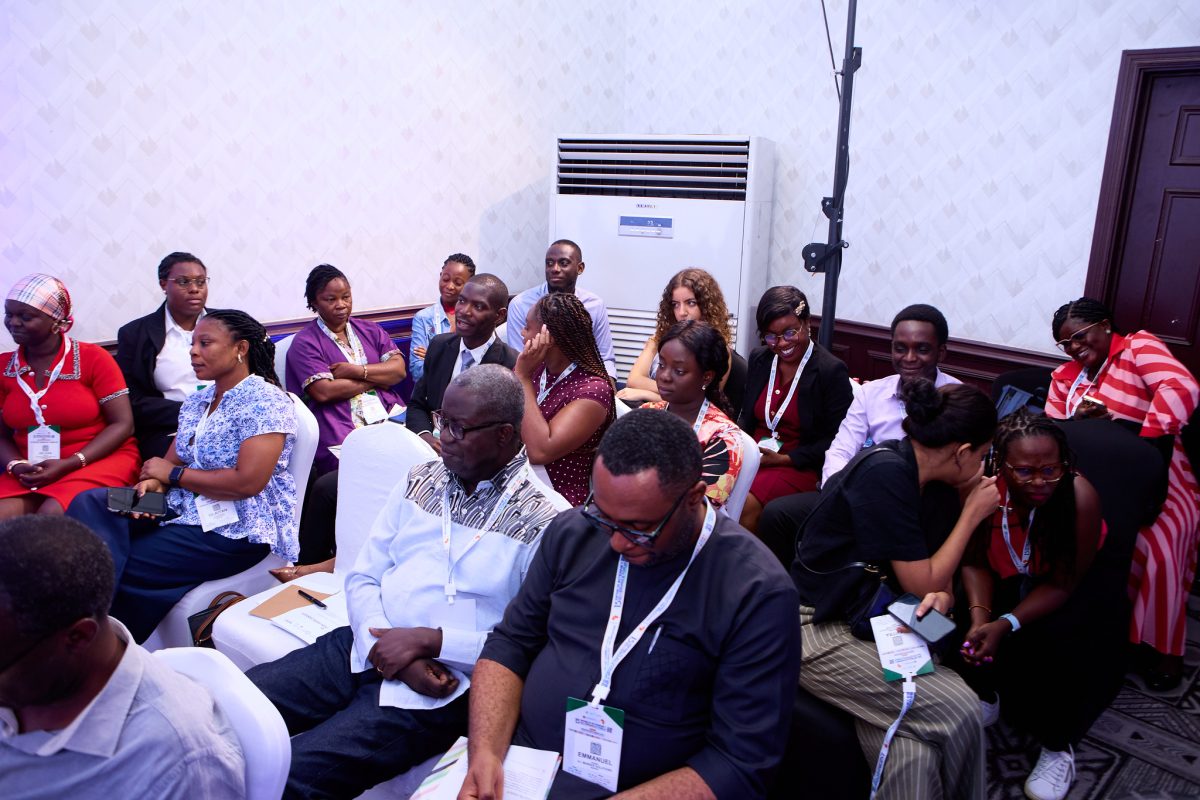
Facilitated by Ms. Anriette Esterhuysen, the session brought together participants from different backgrounds to examine what a Pan-African approach to AI should mean, the priorities it should address, and whether such an approach is feasible given the continent’s governance, infrastructural, and capacity challenges.
Introducing the project underpinning the discussion, Dr. Adio Dinika of the Centre for Media, Communication and Information Research (ZeMKI) at the University of Bremen, Germany, explained that it originated from a fundamental question: how would African peoples want AI systems affecting their lives to be governed? He argued that Africa needed to examine AI governance from its own perspective rather than simply adopting approaches developed by the United States, China, and other global powers.
He recalled the call by Ghana’s former President, Dr. Kwame Nkrumah, for African unity, arguing that without greater continental cooperation, AI development and governance would continue to be shaped predominantly by external actors.
Participants expressed varying attitudes towards AI, with responses ranging from acceptance to uncertainty and outright rejection. While some acknowledged that AI applications had made research, transcription, and other professional activities significantly easier, others expressed concerns about privacy, data exploitation, misinformation, disinformation, and the possible erosion of human creativity.
The discussion also revealed considerable uncertainty about what AI actually means, with participants acknowledging that their understanding was often limited to familiar applications such as ChatGPT. Some observed that AI had existed in different forms for decades, but the current generation of technologies had created new perceptions and expectations about its capabilities.
They attributed much of the apprehension surrounding AI to a fear of the unknown; stressing the need for greater public understanding of how AI systems work, the data they use, and their implications for individuals and communities.
Participants consequently emphasised digital literacy and public education as essential starting points for enabling Africans to engage meaningfully with AI development and governance.
The discussion broadly associated Pan-African AI with technologies shaped by African values, cultures, languages, data, and developmental priorities, with meaningful participation by African peoples in their design, development, deployment, and governance.
Several participants stressed the importance of developing AI systems capable of interacting in African languages and reflecting African realities, including the experiences of communities whose languages and cultures are inadequately represented in existing AI systems.
Others cautioned that a Pan-African approach should not result in technological fragmentation or systems that function exclusively for Africans. Rather, Africa’s priorities should inform AI development while maintaining integration and engagement with the wider global technological ecosystem.
Some participants also argued that the concept should extend beyond developing AI technologies locally to addressing the political and economic structures underpinning their development and governance.
Participants also identified digital infrastructure, quality datasets, research, skills development, and data sovereignty as critical foundations for a meaningful African AI ecosystem. They therefore called for investments in electricity, broadband connectivity, data centres, digitisation of analogue records, preservation of African knowledge, and development of datasets in sectors such as health and agriculture.
The importance of developing African technical expertise, strengthening universities, and supporting research and development also featured prominently in the discussion. Participants observed that African countries needed to invest more substantially in foundational research capacity and university programmes rather than focusing exclusively on startups and commercial innovations. Participants further stressed the need to develop local-language AI models and leverage Africa’s youthful population through appropriate skills development and capacity-building programmes.
The discussion underscored that effective AI governance would require more than strategies, policies, and declarations. Participants highlighted the importance of political will, implementation, oversight, accountability, and the capacity to enforce laws and hold technology companies responsible for harms.
Concerns were raised about whether African countries currently possess the institutional and legal capacity to enforce AI governance frameworks effectively, particularly against powerful global technology companies.
Meanwhile, opinions differed on the feasibility of a Pan-African approach; some participants considered it achievable through collaboration, shared commitments, and coordinated investments, while others questioned whether it was realistic given Africa’s infrastructural limitations, governance challenges, and enforcement difficulties.
Nevertheless, there was considerable support for strengthening collaboration among African countries and stakeholders, including governments, civil society organisations, academia, private sector actors, and communities.
Participants suggested that existing continental initiatives, including the African Union AI Strategy, could provide important foundations for developing a common African approach.
The session was carried out under the “Fostering Digital Pan-Africanism in AI Governance through Evidence and Action” initiative being implemented by a consortium of four organizations led by the Centre for Media, Communication, and Information Research (ZeMKI), a research unit at the University of Bremen in Germany, and will run until the end of March 2030.
The other members of the consortium are Media Rights Agenda (MRA), Association for Progressive Communications (APC), and the Media Foundation for West Africa (MFWA), a regional organization based in Accra, Ghana.
The initiative is funded by Volkswagen Stiftung, a private research funding organization, based in Hannover, Germany.